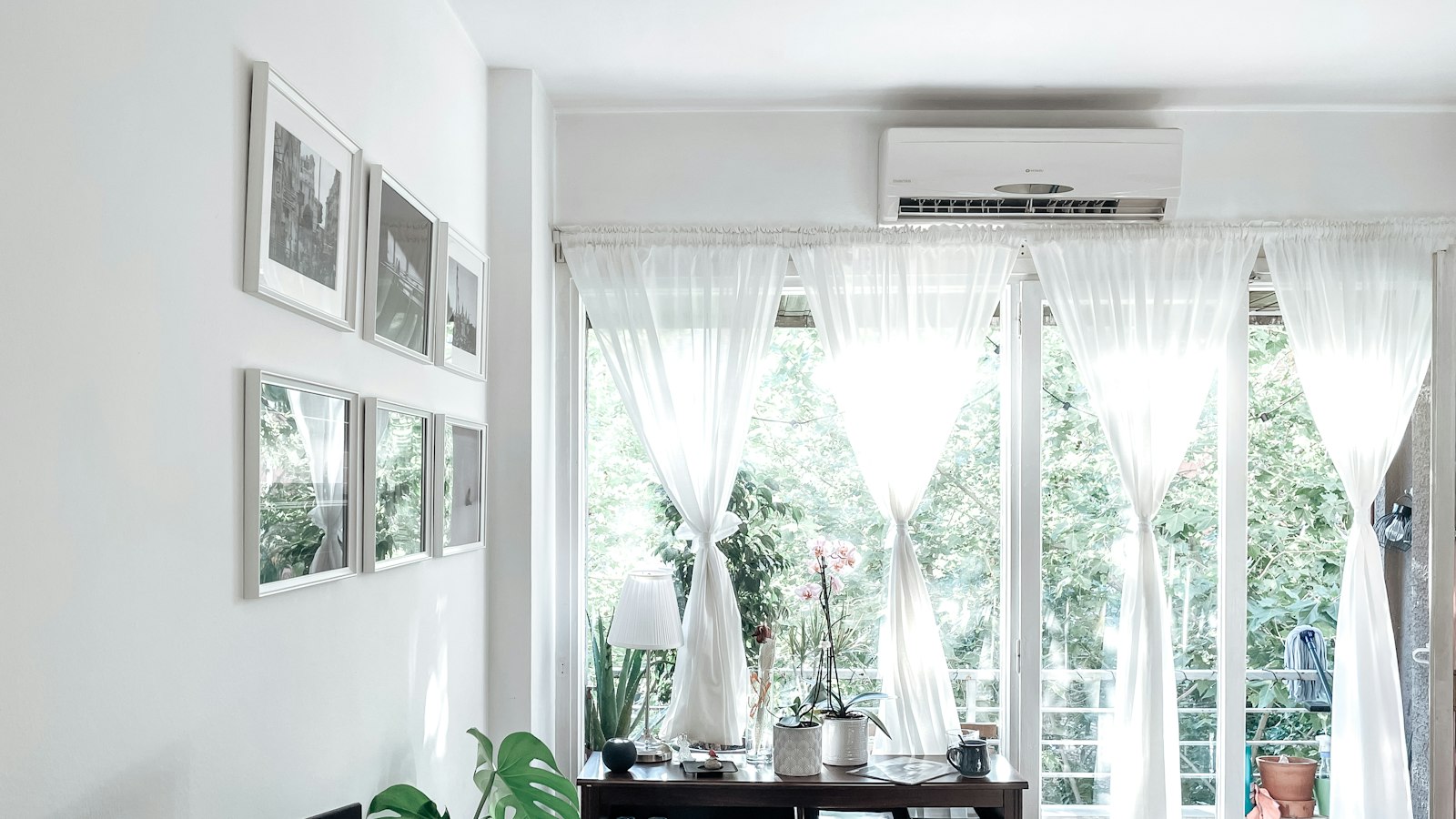
A ductless mini-split typically costs about $4,400 installed, and most jobs run $2,000 to $8,000. A single-zone system for one room or an addition is at the low end. A whole-house system with a head in every bedroom is a different project entirely, and the quotes for it often start above $10,000.
The key to the price is the number of indoor heads, called zones, because each one needs its own line set, wall penetration and electrical work. Sources use different definitions of "mini-split" and "zone," so we show Fixr and This Old House side by side and explain the spread.
Zones are the real price lever
A mini-split has one outdoor compressor and one or more indoor heads. The first zone is the most expensive, because it carries the outdoor unit, electrical hookup and the permit. After that, each extra head adds about $2,000–$3,000 per Fixr.
That is why Fixr's totals go from $2,000–$5,000 for one zone to $9,000–$16,500 for five. This Old House has the same shape at lower prices: an average of $2,750 for one zone and $8,200 for five.
One trap: a multi-zone system with one big outdoor unit is cheaper per head than several single-zone systems, but if the outdoor unit fails, you lose all zones. Single-zone systems cost more in total and give you independent heating and cooling for each space. Ask your installer which design they recommend and why.
Mini split prices at a glance
Installed cost by number of zones
| Zones | Fixr range | This Old House range | This Old House average |
|---|---|---|---|
| 1 | $2,000–$5,000 | $500–$5,000 | $2,750 |
| 2 | $3,000–$8,000 | $1,400–$7,700 | $4,550 |
| 3 | $5,000–$11,000 | $1,800–$9,100 | $5,450 |
| 4 | $7,000–$14,000 | $2,600–$10,700 | $6,650 |
| 5 | $9,000–$16,500 | $4,400–$12,000 | $8,200 |
Cost by room size and BTU capacity
| Room size | BTUs needed | Installed cost |
|---|---|---|
| 150–250 sq ft | 4,500–15,000 | $1,800–$3,000 |
| 250–350 sq ft | 7,500–21,000 | $2,000–$6,600 |
| 350–450 sq ft | 10,500–27,000 | $2,500–$8,500 |
| 450–600 sq ft | 13,500–36,000 | $3,000–$11,500 |
| 600–1,000 sq ft | 18,000–60,000 | $5,500–$13,000 |
Common extras
| Extra | Cost |
|---|---|
| Permit | $250–$400 |
| 200-amp electrical service upgrade | $1,300–$3,000 |
| Subpanel installation | $400–$2,000 |
| Removing old equipment, per unit | $50–$200 |
| Hourly labor, if billed that way | $60–$150 |
Equipment-only pricing (Mitsubishi wall-mounted heads, October 2025)
| Component | Price |
|---|---|
| 36,000 Btu outdoor unit | $4,675 |
| 6,000 Btu wall head | $702 |
| 12,000 Btu wall head | $911 |
| 18,000 Btu wall head | $1,144 |
| 24,000 Btu wall head | $1,289 |
Sizing each room
Mini-splits are sized in BTUs, and Fixr's table matches room size to capacity: 150–250 sq ft needs 4,500–15,000 BTUs, 450–600 sq ft needs 13,500–36,000. Climate shifts that range, with colder zones needing more BTUs per square foot (Fixr lists 30 to 35 BTUs per sq ft in its mildest climate zone and 50 to 60 in its coldest).
Oversizing is a common mistake in a small room. A head that is too large cools the room fast and cycles off before it dries the air. ENERGY STAR's guidance for heat pumps is the same: equipment that is too large or too small will not perform well, and a Manual J load calculation is the way to size it. Ask whether the installer will run one for each room, not only for the whole house.
Labor and who does the work
Labor is 15% to 25% of the total on a single-zone job, or $300–$2,000, according to Fixr. This Old House says 72% of homeowners surveyed who replaced a ductless mini-split paid $150 an hour or more in labor, and that the average paid was $8,221.
The Bureau of Labor Statistics median wage for HVAC mechanics and installers was $29.33 an hour in May 2025, and the difference between that and what you pay is the company's overhead, insurance and warranty. The BLS also says the EPA requires nearly all HVAC technicians to be certified in refrigerant handling.
Budget Heating says precharged or DIY-friendly systems can save $1,000–$2,000 in labor. They exist, and some owners do install them. Be careful: electrical work and permits still apply, and the EPA certification requirement the BLS describes covers refrigerant handling by technicians. Check the manufacturer's warranty terms before you decide to DIY.
Electrical, permits and surprises
A mini-split needs electrical capacity, and homes with an older or full panel may need an upgrade. Fixr lists a 200-amp service upgrade at $1,300–$3,000 and a subpanel at $400–$2,000. Permits run $250–$400.
Other costs to ask about: the length of the line set between the outdoor and indoor units, whether the wall has to be fished through finished drywall or brick, a condensate pump if gravity drainage will not work, and a pad or wall bracket for the outdoor unit. None of the sources we read price these individually, so ask for an itemized quote.
Efficiency, running cost and lifespan
Budget Heating says moving from SEER2 16 to 20 adds about $300–$600 to the price, and puts the typical lifespan at 15–20 years. It reports that simple payback on a high-efficiency unit in a hot region is often 3 to 5 years.
Fixr puts the annual operating cost at $170–$1,200 and the reduction in heating and cooling expenses at 30% to 50%. The Department of Energy says modern air-source heat pumps can cut electricity use for heating by about 50% against furnaces and baseboard heaters. A mini-split heat pump is an air-source heat pump, so the same logic applies. The biggest wins are in homes that heat with electric resistance, oil or propane.
Mini-split versus ducted systems
For a house with no ducts, a mini-split often costs less than adding them. Fixr lists ductwork retrofit at $3,600–$9,500, and EnergySage notes that adding new ductwork can make a ducted system cost about the same as a ductless one. EnergySage's per-ton marketplace average is $4,944 for ductless against $3,790 for ducted.
For a house with good ducts, ducted central equipment is usually cheaper per square foot. See our heat pump cost guide and AC installation guide to compare. Mini-splits make the most sense for additions, converted garages, sunrooms, and hot or cold rooms that central air never reached.
Comparing quotes
Ask for the brand and model of each head and the outdoor unit, the BTU capacity of every zone, the SEER2 and HSPF2 ratings, the line set length, who handles electrical and permits, and the warranty on parts and labor. If two quotes are far apart, check first whether one left out electrical work or the permit.
If a bid is unusually cheap, ask what it skips.
Sample estimate
Illustration
Sample estimate: two-zone mini-split for a 1,900 sq ft house with a finished attic and a sunroom
- Two-zone system, installed (outdoor unit and two heads)
- $5,500
- Electrical subpanel and dedicated circuit
- $800
- Permit
- $300
- Total
- $6,600
Illustration only, not a quote. The system price sits inside Fixr's $3,000–$8,000 range for two zones and This Old House's $1,400–$7,700, the subpanel inside Fixr's $400–$2,000, and the permit inside $250–$400.
Ways to bring the price down
- Start with the one room that actually needs help. One zone at $2,000–$5,000 solves a lot of problems before you commit to a whole-house system.
- If you know you will want three or four rooms, price a multi-zone setup up front. Fixr's added-zone cost of $2,000–$3,000 is far less than buying a second whole system later.
- Get the electrical sorted first. If your panel is full, a subpanel at $400–$2,000 is cheaper than a service upgrade.
- Compare at least three itemized quotes. Fixr's one-zone range alone spans $2,000–$5,000.
- Ask about utility rebates. The federal credit is gone, but state and utility programs still exist for heat pumps.
- Do not buy the highest SEER2 unless you run it most of the year. Budget Heating puts the 16-to-20 premium at $300–$600, so it pays back faster in hot regions.
Frequently asked questions
How much does it cost to install a mini-split?
Fixr's average is $4,400, with a typical range of $2,000–$8,000. A single zone is $2,000–$5,000, and a whole-house multi-zone system can reach $16,500 or more.
How much does each additional zone cost?
Roughly $2,000–$3,000 per added head according to Fixr. The outdoor unit and electrical work are already paid for, so the second and third zones cost less than the first.
Are mini-splits cheaper than central air?
In a house with good ducts, central equipment is usually cheaper. In a house with none, a mini-split often wins, since Fixr puts ductwork retrofit at $3,600–$9,500.
Can I install a mini-split myself?
Some precharged kits are made for it and can save $1,000–$2,000 in labor per Budget Heating. Electrical work and permits still apply, and the BLS notes EPA certification is required for nearly all refrigerant work by technicians.
Is there still a tax credit for mini-splits?
Not for 2026. The IRS credit of up to $2,000 for heat pumps applied to property placed in service before December 31, 2025. State and utility rebates may still be available.
How long does a mini-split last?
Budget Heating gives 15–20 years for a typical unit.
How big a mini-split do I need?
It depends on the room and climate. Fixr pairs 150–250 sq ft with 4,500–15,000 BTUs and 450–600 sq ft with 13,500–36,000 BTUs. A load calculation gives the real answer.
Sources
We compare several independent sources for every guide and say where they disagree. Pages were last checked on the dates shown.
- How Much Does It Cost to Install a Ductless Heat Pump? (opens in a new tab), Fixr. Accessed November 22, 2026. Used for: average and range, cost by zones and room size, labor, permits, electrical
- Split AC Installation Cost (opens in a new tab), This Old House. Accessed November 22, 2026. Used for: cost by zones, labor survey
- How Much Does It Cost to Install a Mini Split in 2026? (opens in a new tab), Budget Heating. Accessed November 22, 2026. Used for: overall range, SEER2 premium, lifespan, DIY labor savings
- How much does a mini-split cost? (opens in a new tab), EnergySage. Accessed November 22, 2026. Used for: marketplace average, per-ton cost, equipment prices
- How much does a heat pump cost in 2026? (opens in a new tab), EnergySage. Accessed November 22, 2026. Used for: ducted versus ductless per-ton cost
- AC Installation Cost (opens in a new tab), Fixr. Accessed November 22, 2026. Used for: ductwork retrofit cost
- Energy Efficient Home Improvement Credit (opens in a new tab), IRS. Accessed November 22, 2026. Used for: heat pump credit cap and termination date
- Pump Up Your Savings with Heat Pumps (opens in a new tab), U.S. Department of Energy. Accessed November 22, 2026. Used for: electricity savings versus furnaces and baseboard heat
- Air-Source Heat Pumps (opens in a new tab), ENERGY STAR. Accessed November 22, 2026. Used for: Manual J sizing guidance
- Heating, Air Conditioning, and Refrigeration Mechanics and Installers (opens in a new tab), U.S. Bureau of Labor Statistics. Accessed November 22, 2026. Used for: median wage, EPA certification
How we put this guide together
We don't take money from contractors or sell your details. Ranges come from published national price data, wage statistics and installer price lists, cross-checked and rounded. Read how we price or tell us if a number looks off in your area via our contact page.
Related cost guides
Heat pump
Installed air-source heat pump, ducted whole-home system
$5,000–$15,000HVAC replacement
Central AC plus gas furnace, 2,000–2,500 sq ft home, existing ducts reused
$11,590–$14,100AC installation
3-ton central AC replacement, installed, existing ductwork
$5,000–$9,150Electrical panel upgrade
Typical total to replace a main panel with a 200-amp panel, labor and permit included
$1,300–$4,500