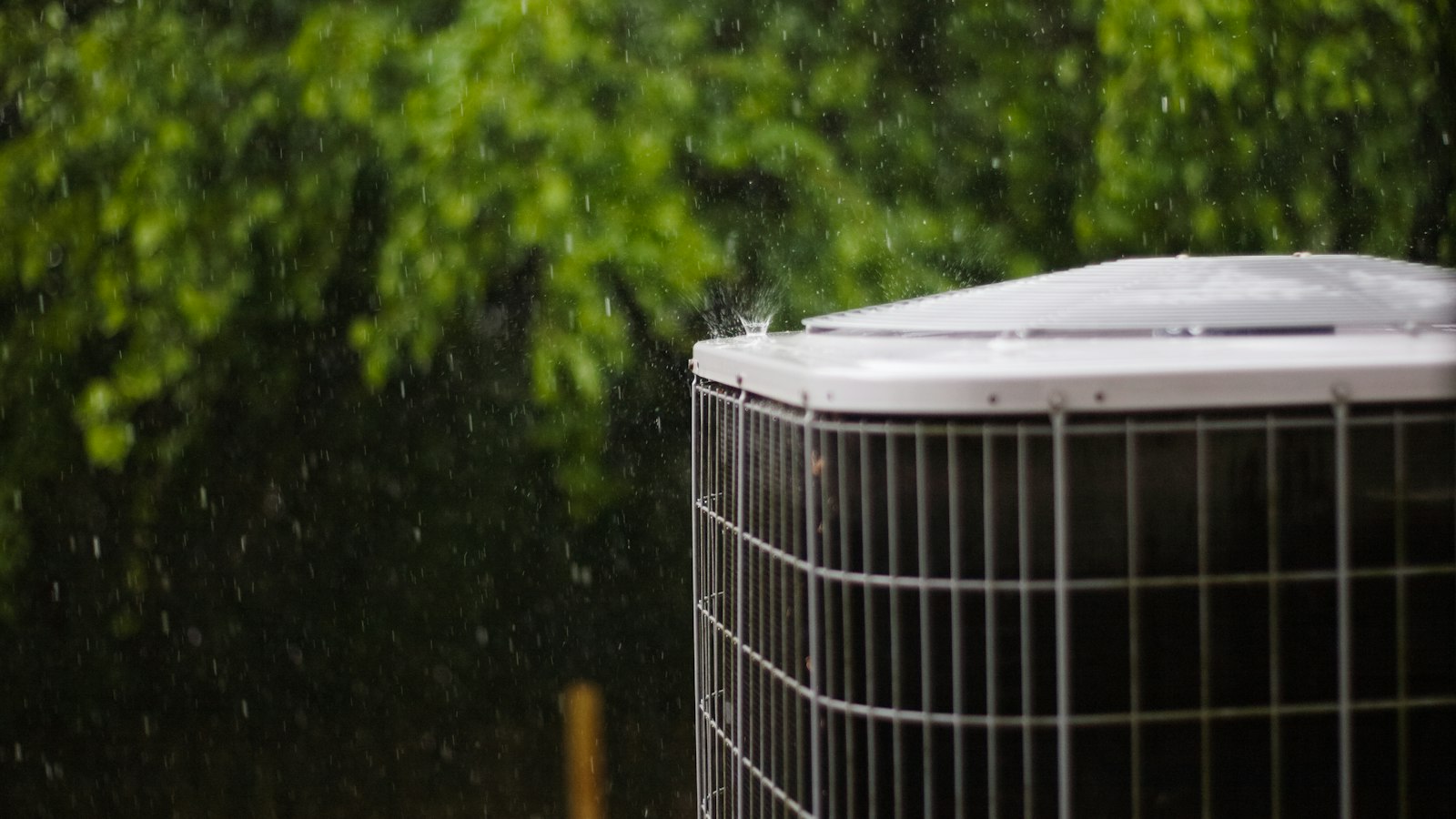
A new central AC with a 3-ton capacity typically costs $5,000–$9,150 installed if your ducts are already in place. That covers the outdoor condenser, the indoor coil, refrigerant lines, labor and hauling away the old unit. Fixr's overall average for a 2,000 sq ft home is $8,750, and This Old House puts central AC at $4,000–$8,000, so the realistic window for most houses is about $5,000 to $9,000.
The price swings with tonnage, efficiency rating and the condition of your ducts far more than with the brand on the cabinet. A house with no ductwork at all is a different, much bigger project, and we cover that below.
What drives the price
Tonnage is the biggest variable. A 1.5-ton unit installed runs $3,650–$6,250, a 3-ton unit $5,000–$9,150, and a 5-ton unit $7,800–$14,000, per Fixr. A ton is 12,000 BTU of cooling, and the right size depends on your insulation, windows, climate and sun exposure, not just floor area.
Efficiency is next. The SEER2 rating is the modern efficiency measure, and the equipment price climbs steeply as it rises. For a 3-ton unit, Fixr shows a 15 SEER model (14.3 SEER2) at $2,300–$4,800 and a 20 SEER model (19.1 SEER2) at $5,750–$9,600. The jump is gradual at first and steep at the top, so the last few SEER points cost the most per point.
Brand matters less than people expect. Fixr's 3-ton equipment ranges for Rheem, Goodman and Amana overlap heavily with Trane and Carrier, and the real difference is usually the compressor type and warranty rather than the nameplate.
AC installation prices at a glance
Installed cost by system size
| Size | Equipment only | Installed |
|---|---|---|
| 1.5 tons (18,000 BTU) | $2,400–$4,250 | $3,650–$6,250 |
| 2 tons (24,000 BTU) | $3,000–$5,500 | $4,250–$7,500 |
| 2.5 tons (30,000 BTU) | $3,300–$6,000 | $4,500–$8,000 |
| 3 tons (36,000 BTU) | $3,800–$7,150 | $5,000–$9,150 |
| 3.5 tons (42,000 BTU) | $4,250–$7,700 | $5,450–$9,700 |
| 4 tons (48,000 BTU) | $5,750–$9,600 | $6,950–$11,600 |
| 5 tons (60,000 BTU) | $6,600–$12,000 | $7,800–$14,000 |
Installed cost by home size
| Home size | Installed cost |
|---|---|
| 1,000 sq ft | $2,900–$7,200 |
| 1,500 sq ft | $4,350–$10,800 |
| 2,000 sq ft | $5,800–$14,400 |
| 2,500 sq ft | $7,250–$18,000 |
| 3,000 sq ft | $8,700–$21,600 |
| 3,500 sq ft | $10,150–$25,200 |
How efficiency rating affects the equipment price (3-ton unit only)
| SEER / SEER2 | Unit price, before labor |
|---|---|
| 14 / 13.4 | $1,725–$3,600 |
| 15 / 14.3 | $2,300–$4,800 |
| 16 / 15.3 | $2,875–$6,000 |
| 17 / 16.2 | $3,450–$6,600 |
| 18 / 17.2 | $4,100–$7,800 |
| 20 / 19.1 | $5,750–$9,600 |
3-ton unit price by brand (equipment only)
| Brand | Price range |
|---|---|
| Amana | $3,600–$6,000 |
| Rheem | $3,650–$6,450 |
| Goodman | $3,800–$6,650 |
| Trane | $3,900–$7,000 |
| Carrier | $4,000–$7,700 |
| Lennox | $4,000–$7,150 |
| American Standard | $4,400–$7,000 |
Getting the size right
Bigger is not better with air conditioning. ENERGY STAR says equipment that is too large or too small will not perform well, and it recommends a Manual J load calculation to determine the right size. An oversized unit cools the house quickly, then shuts off before it has removed much humidity, leaving the air cool and clammy.
This Old House gives a rough guide: a 1.5-ton system for a 1,000 sq ft home, 3 tons for 1,800 sq ft, 3.5 tons for 2,000 sq ft and 4 tons for 2,500 sq ft. Treat that as a starting point. A shaded brick ranch in Ohio and a west-facing stucco house in Phoenix of the same size can need very different capacities.
If a contractor quotes without going into your attic or measuring a single room, keep looking.
If you have no ducts, or bad ones
The numbers above assume the ducts are there and usable. If they are not, the picture changes fast. Fixr lists new ducts at $3,600–$9,500 for labor and materials, and puts a retrofit of a 3-ton unit with ducts in a 2,000 sq ft home at $8,650–$20,200. For an older house with 180–300 feet of ducts, its range is $8,650–$22,000. Replacing very old or damaged ducts alone is $7,500–$16,000.
In a home with no ducts, a ductless mini-split system is often the cheaper way to cool it. Fixr lists a mini-split at $3,150–$9,000 as an alternative, and our mini-split cost guide breaks down the zone-by-zone pricing.
Labor, permits and removal
Fixr puts labor for a split system at $1,250–$3,000 when ducts exist, and $2,215–$5,325 for a full AC and duct install. Packaged units, which sit entirely outside, run $1,000–$2,500 in labor. Hourly rates are quoted at $75–$250.
The Bureau of Labor Statistics reports a median wage of $29.33 an hour for HVAC mechanics and installers (May 2025). What you pay a company includes the van, insurance, warranty work and the office, which is why the invoice rate is several times the wage.
A few other line items to expect:
- Removal and disposal of the old unit: $150–$250 per Fixr.
- Permit for a new AC or furnace: about $250–$1,500 in Budget Heating's survey, though some areas charge much less.
- Refrigerant line set, if the old one cannot be reused: roughly $500–$800 per Budget Heating.
EPA refrigerant certification is required for nearly all HVAC technicians, according to the BLS. Ask to see it before the crew arrives.
AC only, or a heat pump?
A heat pump is an air conditioner that can also run in reverse to heat your home. Fixr lists a heat pump at $3,625–$10,800 as a related cost, and This Old House gives $4,500–$8,000 for an air-source heat pump against $4,000–$8,000 for central AC. If your furnace is also old, a heat pump can replace both and avoid a second large purchase.
The tax angle used to favor heat pumps and central AC alike. The IRS says the credit applied to qualifying property placed in service before December 31, 2025, so neither earns it in 2026. See the heat pump cost guide for how the whole-home math works now, and the HVAC replacement guide if the furnace is also due.
When replacing makes sense
Replace if the unit is old enough that parts are getting hard to find, or if a repair quote is a big slice of a new system's price. Budget Heating's rule of thumb is that a repair approaching 30% to 50% of the cost of a new system often makes replacement the better choice.
Budget Heating also says going from 15 to 20 SEER2 can save about $200 a year in high-rate states. In a mild climate with cheap power that will take a long time to repay the extra equipment cost, so the mid-efficiency tier is often the sweet spot.
How to compare quotes
Ask each contractor for the model numbers of the condenser, coil and air handler or furnace, the SEER2 rating, whether a load calculation was done, whether the permit is included, and what the warranty covers for labor versus parts. Quotes that skip those details cannot be compared.
Be wary of anyone who asks for a large deposit before pulling a permit, or who pushes a deal that expires "today." A fair HVAC quote is the same on Monday as it is on Friday.
Sample estimate
Illustration
Sample estimate: 1,800 sq ft house in Ohio, 3-ton AC, existing ducts
- 3-ton condenser and coil, mid-efficiency (about 16 SEER)
- $4,800
- Installation labor, split system
- $2,200
- Removal and disposal of old unit
- $200
- Permit and inspection
- $300
- Total
- $7,500
Illustration only, not a quote. Each line is a point inside the published range (Fixr for equipment, labor and removal; Budget Heating for the permit), and the total sits inside Fixr's $5,000–$9,150 range for a 3-ton install.
Ways to bring the price down
- Replace in the off-season. Contractors have open schedules in cooler months, and you are not stuck accepting the first slot in a heat wave.
- Pick the mid-efficiency tier unless you run AC most of the year. Fixr's 3-ton prices climb by thousands of dollars from 15 SEER to 20 SEER.
- Have the ducts inspected first. A leaky duct system wastes the money you spend on a better unit.
- Bundle with a furnace replacement if that unit is also old. Fixr's furnace-and-AC range is $7,500–$21,000, and one visit saves a permit and a removal fee.
- Ask about utility rebates before you sign. Many programs require pre-approval, and they pay on specific models only.
- Get three written quotes with the same model specs so you are comparing equals.
Frequently asked questions
How much does it cost to install central AC in an existing house?
Fixr says $5,800–$14,400 for a 2,000 sq ft home, with an average near $8,750. A 3-ton replacement with existing ducts is $5,000–$9,150. Adding AC to a home that has a furnace but no cooling is $5,050–$10,700 for a 3–3.5 ton unit.
How much does it cost to replace a central AC unit?
Most replacements run $4,000–$9,000, depending on tonnage and efficiency. This Old House puts central AC at $4,000–$8,000, and Fixr's 3-ton installed range is $5,000–$9,150.
What size AC do I need for a 2,000 sq ft house?
Fixr's pricing suggests 3 to 3.5 tons is common for homes of that size, but the right number comes from a Manual J load calculation. Insulation, windows, climate and shading all change the answer.
Is a higher SEER rating worth it?
Only if your cooling bills are high. Budget Heating estimates about $200 a year in savings from 15 to 20 SEER2 in high-rate states, while Fixr's equipment prices for a 3-ton unit jump from $2,300–$4,800 to $5,750–$9,600 across that range.
Does a new AC need a new furnace?
Not always, but the indoor coil and blower have to match the outdoor unit. If the furnace is old, replacing both together is often cheaper in labor than doing two jobs. See our HVAC replacement guide.
How much does it cost to add central air to a house with a furnace?
Fixr puts adding central air to an existing furnace at $5,050–$10,700 for a 3–3.5 ton system. The price depends mostly on whether the existing ducts can handle the extra airflow.
Can I get a tax credit for a new central AC?
Not for 2026 installs. The IRS lists a $600 per-item limit for central AC under the 25C credit, but it covered property placed in service before December 31, 2025.
Sources
We compare several independent sources for every guide and say where they disagree. Pages were last checked on the dates shown.
- AC Installation Cost (opens in a new tab), Fixr. Accessed November 22, 2026. Used for: installed ranges by tonnage, home size, SEER, brand, labor, ductwork, removal
- HVAC Installation Cost (opens in a new tab), This Old House. Accessed November 22, 2026. Used for: central AC cost range
- Furnace and AC Installation Cost 2026 (opens in a new tab), Budget Heating. Accessed November 22, 2026. Used for: permits, line sets
- How Much Does a New Furnace Cost in 2026? (opens in a new tab), Budget Heating. Accessed November 22, 2026. Used for: repair-or-replace threshold, SEER2 savings
- Energy Efficient Home Improvement Credit (opens in a new tab), IRS. Accessed November 22, 2026. Used for: central AC credit limit and termination date
- Heating, Air Conditioning, and Refrigeration Mechanics and Installers (opens in a new tab), U.S. Bureau of Labor Statistics. Accessed November 22, 2026. Used for: median wage, EPA certification
- Air-Source Heat Pumps (opens in a new tab), ENERGY STAR. Accessed November 22, 2026. Used for: Manual J sizing guidance
How we put this guide together
We don't take money from contractors or sell your details. Ranges come from published national price data, wage statistics and installer price lists, cross-checked and rounded. Read how we price or tell us if a number looks off in your area via our contact page.
Related cost guides
HVAC replacement
Central AC plus gas furnace, 2,000–2,500 sq ft home, existing ducts reused
$11,590–$14,100Heat pump
Installed air-source heat pump, ducted whole-home system
$5,000–$15,000Furnace replacement
Typical installed gas furnace replacement, most homes
$2,800–$6,900Mini split
Installed ductless mini-split heat pump, typically one or two zones
$2,000–$8,000