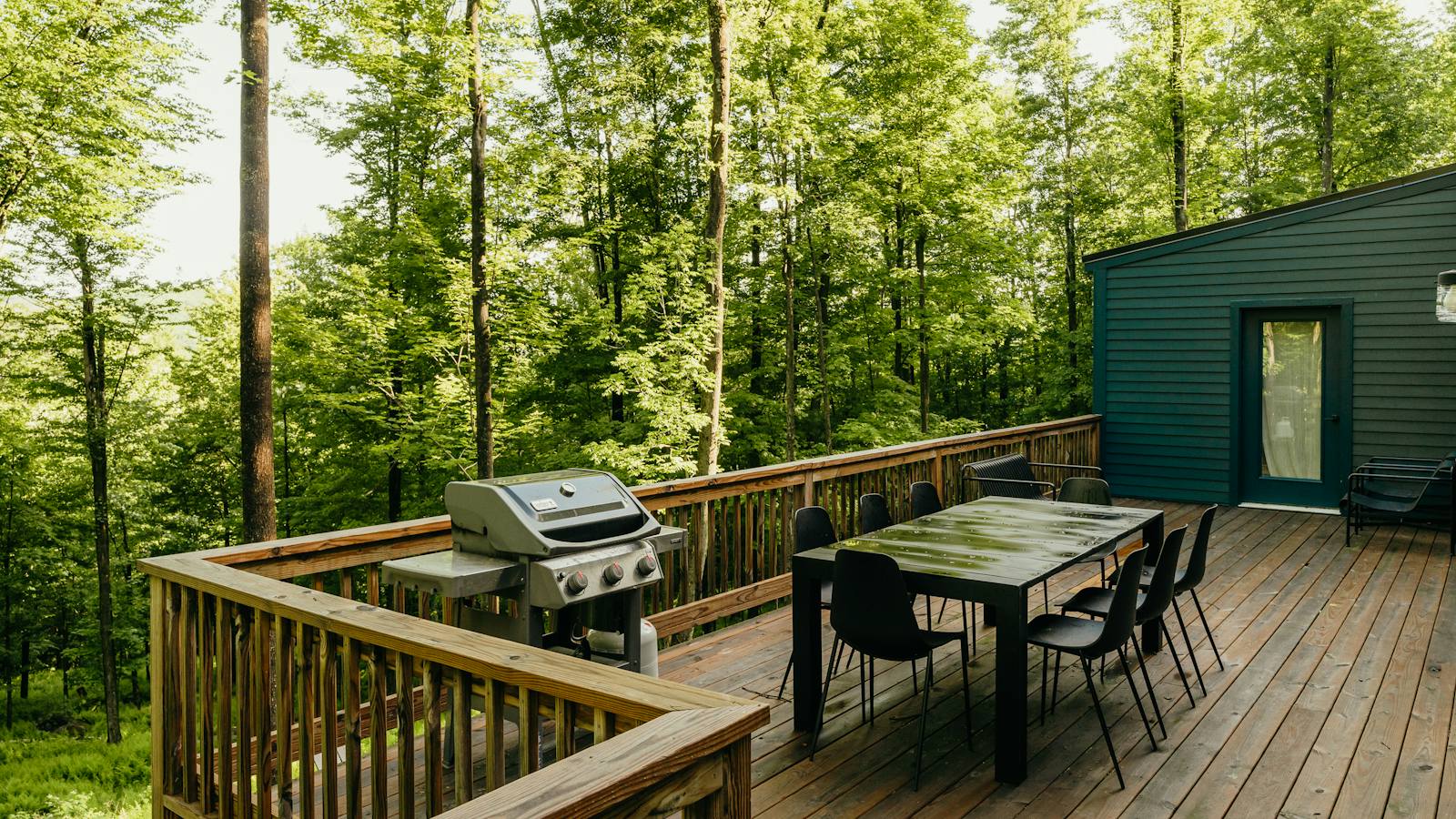
A typical professionally built deck costs about $7,300, with most projects landing between $3,900 and $10,500, according to Lawnlove's national figures. Per square foot, pressure-treated wood runs about $20–$35 installed, and composite starts closer to $30 and can pass $60.
The headline numbers hide a large gap between a small ground-level platform and a raised, railed, multi-level deck. The JLC Cost vs Value report, which models a bigger and better-finished project than the average, puts a wood deck addition at $18,263 and a composite one at $25,096. Both are real numbers. They just answer different questions.
What actually sets the price
Four choices decide the bill, and the first one is the biggest.
- Material. Pressure-treated pine is the cheap standard. Cedar and redwood cost more. Composite and PVC cost the most upfront and spare you the annual maintenance. InspectandTest gives installed ranges of about $20–$35 for ground-level treated wood and $30–$60 for composite.
- Height. A deck under about 30 inches off the ground is much cheaper than one at second-story height. InspectandTest lists raised treated wood at $30–$50 per sq ft, since taller decks need longer posts, bracing, a rail and stairs.
- Size. Bigger decks cost more in total and less per square foot, because the fixed costs of permits, footings and delivery spread over more boards.
- Add-ons. Railing, stairs, built-in seating, lighting and pergolas. These are usually where a $7,000 plan becomes $12,000.
Footing depth matters in cold climates. InspectandTest notes frost depths of 30 to 36 inches along Colorado's Front Range, and footings run $150–$500 each, more in rock.
Deck prices at a glance
Installed cost per square foot by material
| Material | Installed per sq ft | 12 x 16 ft (192 sq ft) total | Lifespan |
|---|---|---|---|
| Pressure-treated, ground level | $20–$35 | $4,000–$9,000 (treated wood, any height) | 10–15 years (pine, Lawnlove) |
| Pressure-treated, raised or second story | $30–$50 | $5,800–$9,600 (raised 6 ft example) | 10–15 years |
| Cedar or redwood | $28–$55 | Not stated | Cedar 15–20; redwood up to 30 (Lawnlove) |
| Composite | $30–$60 | $6,000–$14,500 | Not stated |
| PVC or premium capped composite, raised | $45–$75 or more | Not stated | Not stated |
Total cost by deck size (Lawnlove)
| Deck size | Total cost |
|---|---|
| 200 sq ft | $3,000–$10,000 |
| 300 sq ft | $4,500–$15,000 |
| 400 sq ft | $6,000–$20,000 |
| 500 sq ft | $7,500–$25,000 |
Extras that add up
| Item | Typical cost | Source |
|---|---|---|
| Footings | $150–$500 each, more in rock | InspectandTest |
| Wood railing | $30–$70 per linear foot | InspectandTest |
| Metal or composite railing | $60–$150 per linear foot | InspectandTest |
| Stairs | $100–$400 per step | InspectandTest |
| Permit | $225–$500 | Inch Calculator |
| Old deck demolition | $500–$1,000 | Inch Calculator |
Wood or composite?
Composite costs more at the register and less over time, if you keep the deck for a decade or more. You skip the staining, the sanding and the board replacement, though you still have to clean it.
The resale math is close. JLC's Cost vs Value 2025 report shows a wood deck addition costing $18,263 and returning $17,323 at resale, which is 95%. A composite deck cost $25,096 and returned $22,199, which is 89%. Wood recoups slightly more of its cost because it costs less to begin with. Neither one makes you money. Both help the house sell.
One caution on that comparison. The JLC projects are larger than the average deck, so the dollar figures sit well above the $7,300 national average. Use the percentages, not the totals, to judge value.
My take: if you plan to stay in the house at least ten years and dislike weekend maintenance, composite is worth the premium on the decking boards. If you move in five years, or the deck is a simple ground-level platform, treated wood is hard to beat on value.
Labor and who builds it
BLS lists carpenters at a median of $29.12 per hour in May 2025 data. That is wages, not what a contractor charges. Once you add insurance, tools, overhead and profit, the billed rate is much higher, and that is why labor is a large share of the installed price.
Inch Calculator puts deck labor at $15–$35 per square foot. Lawnlove, which compares DIY with professional pricing, shows a DIY deck at $2,133–$6,853 against $3,920–$10,540 hired out, so the gap is real but not as big as some people expect once you buy tools and fix mistakes. Its tool list adds $178 in purchases and $271 per day in rentals.
Decks are one of the more forgiving DIY projects for a handy person, with two exceptions. The ledger, which attaches the deck to the house, is a structural and water-intrusion issue. And footing layout has to be right before anything else goes on. Many people build the deck themselves and hire out those two steps.
Permits, inspections and hidden costs
Almost every jurisdiction requires a permit for an attached deck, and many require one for a freestanding deck above a certain height or size. Inch Calculator lists permits at $225–$500, though its page is dated 2023. InspectandTest says only that fees vary by building department.
Watch for these line items that often fall outside the headline per-square-foot price:
- Demolition of the old deck, $500–$1,000 (Inch Calculator), usually a separate line.
- Stairs, $100–$400 per step. A 6-foot rise needs about 9 or 10 steps, and InspectandTest puts that at roughly $900–$4,000.
- Railings. A rail on three sides of a deck is often 40 linear feet or more. At $30–$70 per foot in wood, that is a four-figure line.
- Stain or sealer for wood. It is a recurring cost, not a one-time one.
- Rock or poor soil that makes footings cost more.
Tell the contractor you want the railing and stairs priced as separate lines. It makes quotes easier to compare.
Comparing quotes and spotting problems
Ask every bidder to quote the same thing: dimensions, height off the ground, decking material and brand, joist spacing, footing count and depth, railing type, stairs, and who pulls the permit.
Then compare per square foot after subtracting the extras. If one bid is far below the others, look at the framing. Cheap bids often use thinner joists, fewer footings or no flashing at the ledger. None of those are visible once the decking goes down.
Good signs: a written permit plan, a proper inspection schedule, and a contractor who volunteers a warranty on workmanship. Walk away from anyone who suggests skipping the permit. An unpermitted deck can cause trouble when you sell, and it may void a homeowner's insurance claim after an accident.
Size, shape and the per-square-foot trap
Per-square-foot prices are handy for rough planning, but they mislead when you apply them to very small or very large decks. Lawnlove's size table shows the pattern in dollars: a 200 sq ft deck runs $3,000–$10,000 and a 500 sq ft deck runs $7,500–$25,000. The totals more than double while the area grows two and a half times, which is what you would expect when fixed costs (permit, delivery, plans) spread across more boards.
Shape matters as much as area. A plain rectangle is the cheapest layout. Angled corners, curves, multiple levels and built-in benches all add framing and cutting time. InspectandTest's worked examples for a 12 x 16 foot deck assume a simple rectangle, which is why its totals look modest next to the JLC project costs.
A tip when you plan: ask your builder to price the deck as a plain rectangle first, then price each upgrade separately. Seeing that a corner bench costs a certain amount on its own is a better basis for a decision than a single lump sum.
Upkeep over the first ten years
Sticker price is half the story. A treated pine deck usually needs cleaning and sealing every couple of years, and you will replace the occasional board. Lawnlove says pine lasts 10 to 15 years, so a deck built today may need serious work or replacement by the time you would otherwise be trading up.
Composite takes the staining off your list. You still sweep, wash and watch for mildew in shade, and fasteners and railings need an occasional check. PVC decking, which Lawnlove says needs less maintenance than most materials, sits at the high end of the price range, at about $45–$75 per sq ft for premium capped products according to InspectandTest.
If you do the math on a 15-year horizon, composite and wood come out much closer than they do on the day you sign the contract, especially if you pay for professional staining. If you do your own staining and enjoy the work, wood stays cheaper.
When a deck pays back, and when it does not
A deck is one of the better outdoor projects for resale, but it still does not make money. JLC's Cost vs Value 2025 report puts the wood deck addition at 95 percent recouped and composite at 89 percent. For comparison, a backyard patio in the same report recoups 46 percent, so a deck is roughly twice as good at holding value.
The practical read: build a deck because you will use it. If you will use it for ten years, the cost per summer is modest. If you are selling within a few years and the yard has no usable outdoor space, a simple, well-built wood deck is the safer play than a premium composite one with lighting and a pergola.
Two questions worth answering before you call anyone. How will you use it, and who needs to fit on it? A deck that seats six at a table needs more square footage than one that holds two chairs and a grill, and size is the cost lever you control most directly.
Lifespan and upkeep
Wood decks last anywhere from 10 to 30 years depending on material, maintenance and exposure, per InspectandTest. Lawnlove gives more detail: pine 10 to 15 years, cedar 15 to 20, redwood up to 30, and ipe 50 years or more.
The upkeep difference is what drives total cost over time. A wood deck that is sealed every couple of years will last far longer than one that is ignored, and a deck in full sun or constant shade ages faster. Composite resists rot, but it can fade and stain, and it still needs scrubbing.
The frame matters more than the boards. A treated-wood frame under composite decking is the most common build, and it limits the life of the whole deck to the life of the frame. If you want a very long-lived deck, steel or aluminum framing costs 20 to 40 percent more than wood, according to InspectandTest.
Sample estimate
Illustration
Sample estimate: 12 x 16 ft ground-level pressure-treated deck with three steps
- 192 sq ft of ground-level pressure-treated deck at $28 per sq ft installed
- $5,376
- Stairs, 3 steps at $250 per step
- $750
- Building permit
- $350
- Demolition and haul-away of the old deck
- $750
- Total
- $7,226
This is an illustration, not a quote. It uses a mid-range figure from InspectandTest's $20–$35 range, mid-range stairs, and midpoints of Inch Calculator's permit ($225–$500) and demolition ($500–$1,000) ranges. A deck under about 30 inches typically needs no railing; a raised deck would add it.
Ways to bring the price down
- Build low to the ground if the yard allows. InspectandTest lists ground-level treated wood at $20–$35 per sq ft against $30–$50 for raised.
- Use composite only where it matters. Some builders will use treated wood for the frame and a composite surface to control cost.
- Hold off on the railing if code allows, or choose a simple wood rail at $30–$70 per foot rather than metal or composite at $60–$150.
- Keep the footprint to a standard size. Odd shapes and curves mean more cuts and more waste.
- Get quotes in late fall or winter. Deck builders are busiest in spring and early summer.
- Do the demolition yourself if the old deck is in good enough shape to take apart. It saves the $500–$1,000 a crew would charge.
Frequently asked questions
How much does a 12x12 deck cost?
At 144 square feet and the $20–$35 per sq ft range for ground-level treated wood, expect roughly $2,900–$5,000. Composite at $30–$60 would be about $4,300–$8,600. Add stairs, railing and permits on top.
Is composite decking worth the extra cost?
It depends on how long you will stay. It costs more upfront, around $30–$60 per sq ft installed against $20–$35 for treated wood, but needs far less upkeep. JLC's 2025 data shows wood recouping 95% at resale and composite 89%.
How much does a deck add to home value?
JLC's Cost vs Value 2025 report found a wood deck addition recoups about 95% of its cost at resale and a composite one about 89%. Inch Calculator cites an ROI near 50%, though its page is older. The JLC study is the more recent and more rigorous source.
Do I need a permit to build a deck?
Usually, for an attached deck and often for a freestanding one over a certain height. Inch Calculator lists permits at $225–$500. Rules differ by city, so ask your building department before you start.
How long does a wood deck last?
InspectandTest says roughly 10 to 30 years. Lawnlove narrows it by species: pine 10 to 15, cedar 15 to 20, redwood up to 30, ipe 50 or more.
How much does it cost to build a deck yourself?
Lawnlove puts a DIY deck at $2,133–$6,853 against $3,920–$10,540 when a professional builds it. That figure assumes you buy about $178 of tools and rent others at about $271 per day.
How much does it cost to replace deck boards only?
The sources reviewed here do not give a price for board-only replacement. Get a quote from a local deck contractor, and have them check the joists and framing at the same time. If the frame is rotted, new boards will not last.
Sources
We compare several independent sources for every guide and say where they disagree. Pages were last checked on the dates shown.
- How Much Does a Deck Cost? (opens in a new tab), Lawnlove. Accessed November 22, 2026. Used for: national average and range, totals by size, lifespan by species, DIY vs pro
- Deck Construction Cost: Typical 2026 Prices by Material (opens in a new tab), InspectandTest. Accessed November 22, 2026. Used for: installed cost per sq ft by material, totals for 12 x 16 ft, footings, railings, stairs, lifespan
- Cost vs. Value Report 2025 (opens in a new tab), Journal of Light Construction / Zonda. Accessed November 22, 2026. Used for: wood and composite deck addition cost and resale value
- Cost to Build a Deck (opens in a new tab), Inch Calculator. Accessed November 22, 2026. Used for: permit, demolition, labor per sq ft (page dated 2023)
- Carpenters, Occupational Outlook Handbook (opens in a new tab), U.S. Bureau of Labor Statistics. Accessed November 22, 2026. Used for: median hourly wage of carpenters, May 2025
How we put this guide together
We don't take money from contractors or sell your details. Ranges come from published national price data, wage statistics and installer price lists, cross-checked and rounded. Read how we price or tell us if a number looks off in your area via our contact page.
Related cost guides
Concrete patio
Typical installed cost of a poured concrete patio, national average and range (LawnStarter, October 2026)
$1,533–$4,740Fence installation
Typical total for roughly 100 to 200 linear feet of wood fence, installed
$2,000–$7,000Driveway
Typical installed cost of a new driveway, national average and range (Fixr, mixed materials)
$3,200–$10,000Exterior painting
Professional exterior paint job, 2,000 sq ft one-story house
$4,400–$8,800Siding replacement
Typical total to re-side a whole house, labor and materials included
$8,500–$20,000