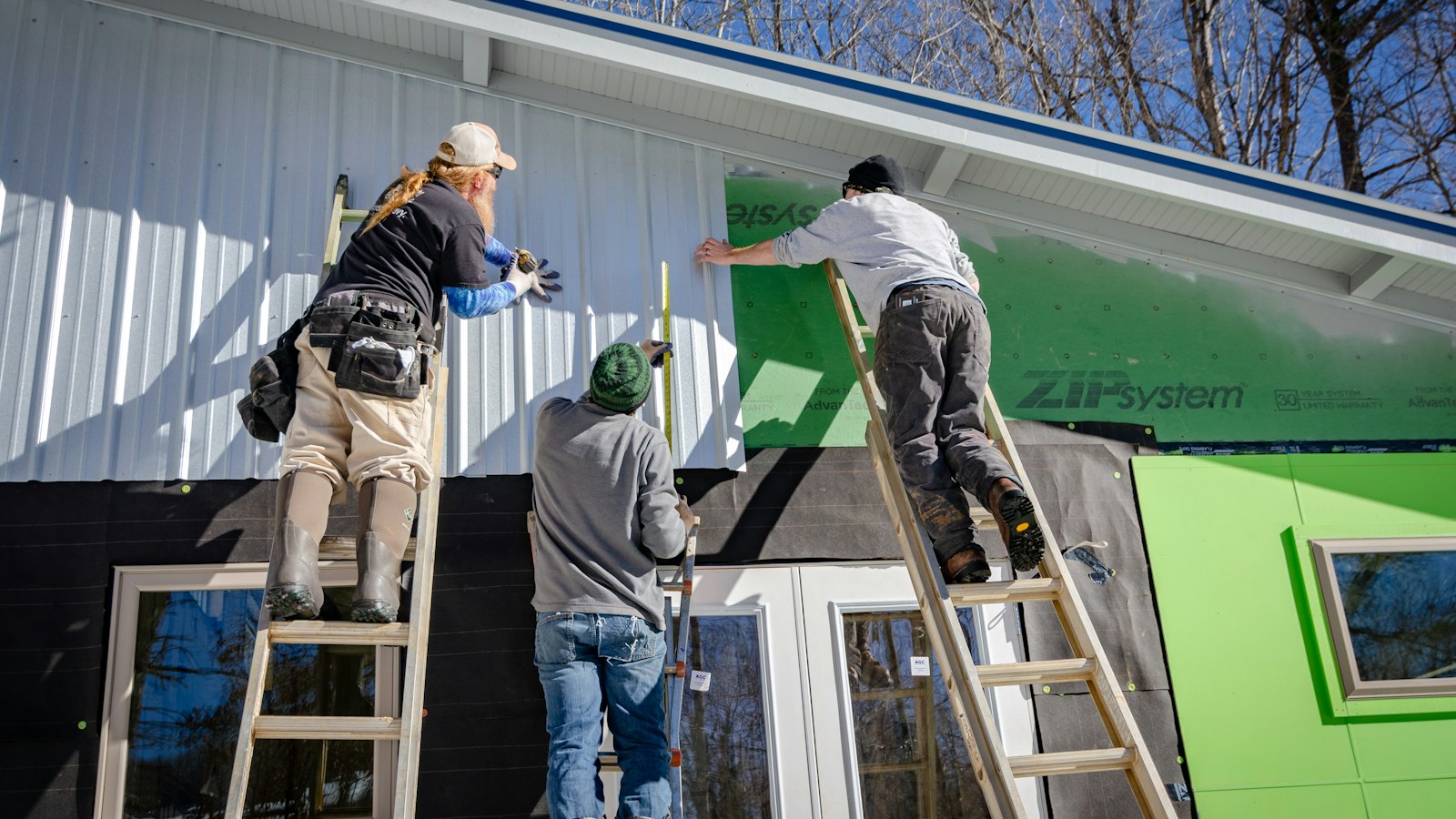
Replacing siding on an average house costs about $14,500, and most homeowners pay between $8,500 and $20,000. Vinyl is the budget choice at about $3 to $12 per sq ft installed, and fiber cement is the popular step up at $5 to $14.
The national figures hide a lot of variation. Wall area, number of stories, trim detail and what is hiding behind the old siding matter as much as the material. And sources sit apart: TOH's $19,000 average is $4,500 above Fixr's. Use these numbers to size your budget, then get local bids.
What drives the price
Material
Material sets the price tier. Vinyl is the baseline. Fiber cement runs about 40% to 50% more per sq ft in TOH's table ($9 against $6.13), and stucco, cedar and stone climb from there. The rule of thumb among contractors is that you buy lifespan with every step up: TOH rates vinyl at 20 to 40 years, fiber cement at 50 or more, and brick or stone veneer at 100 or more.
Wall area, not floor area
Fixr's size table shows a 2,000 sq ft house needs roughly 1,800 to 2,000 sq ft of siding. Gables, bump-outs and tall walls add area, and windows and doors take it away. Contractors measure the actual walls, then subtract openings. Ask for the measurement and compare it across bids.
Stories and access
A two-story house needs scaffolding or tall ladders, and the work is slower. Dormers and detailed trim take longer too. Expect higher labor if the siding is anything beyond flat walls.
Trim, house wrap and repairs
TOH puts house wrap and moisture barriers at $0.50 to $1 per sq ft, and trim and accessories at about $1,000 in one of its worked examples. If the crew finds rotted sheathing, the repair is extra. TOH recommends a 10% to 20% contingency, which is smart advice for any job where hidden damage is likely.
Siding replacement prices at a glance
Siding cost by material
| Material | Installed per sq ft (Fixr) | Installed per sq ft (TOH) | Lifespan (TOH) |
|---|---|---|---|
| Vinyl | $3–$12 | $6.13 | 20–40 yrs |
| Aluminum | $3–$10 | $7.32 | 20–40 yrs |
| Fiber cement | $5–$14 | $9.00 | 50+ yrs |
| Stucco | $7–$17 | $9.66 | 50–80 yrs |
| Wood (cedar in TOH) | $2–$15 | $11.70 | 20–40 yrs |
| Stone veneer | $5–$11 | $14.16 | 100+ yrs |
| Brick veneer | $3–$13 | $20.00 | 100+ yrs |
| Steel | $4–$16 | n/a | n/a |
| Engineered wood | $2–$10 | n/a | n/a |
| Full brick | $8–$21 | n/a | n/a |
Siding cost by house size
| Home size (sq ft) | Siding needed (sq ft) | Cost range (Fixr) |
|---|---|---|
| 1,000 | 1,200–1,300 | $3,600–$19,500 |
| 1,500 | 1,600–1,800 | $4,800–$27,000 |
| 2,000 | 1,800–2,000 | $5,400–$30,000 |
| 2,500 | 2,000–2,200 | $6,000–$33,000 |
| 3,000 | 2,300–2,500 | $6,900–$37,500 |
Whole-house totals for a 2,000 sq ft home (TOH)
| Material or style | Total |
|---|---|
| Vinyl | $12,252 |
| Plank or shiplap | $14,210 |
| Aluminum | $14,649 |
| Board and batten | $16,870 |
| Stucco | $19,320 |
| Cedar | $23,400 |
| Stone veneer | $28,320 |
Labor and who you hire
Fixr puts siding labor at $1 to $4 per sq ft of siding, or $1,800 to $8,000 for an average home, and notes some crews bill $40 to $90 an hour. TOH lists labor at $2 to $8 per sq ft for fiber cement. Fiber cement is heavier, needs special cutting tools and dust control, and takes longer to hang, so it costs more to install than vinyl.
For comparison, the Bureau of Labor Statistics shows a median wage of $29.12 an hour for carpenters in May 2025. That is the nearest published trade benchmark we found, not a siding-specific one, and contractors bill above it to cover insurance, tools, overhead and profit.
Siding is a trade where quality is hard to see until it fails. Ask to see a house the crew finished a few years ago. Check that the contractor details flashing at windows and doors, laps and caulks correctly, and fastens vinyl loosely enough to let it move. If you are choosing fiber cement, ask whether the crew follows the manufacturer's installation instructions, as warranty coverage depends on it.
Removal, permits and other add-ons
- Removal and disposal: $1,000 to $2,500 (Fixr). TOH's worked examples use $1,000 and $2,000.
- Permits and inspections: $150 to $1,500 (Fixr) or $100 to $500 (TOH). The difference probably reflects different towns, so ask your building department.
- House wrap and moisture barrier: $0.50 to $1 per sq ft (TOH).
- Insulation or trim upgrades: TOH's fiber cement example includes $2,500 for these.
- Structural repairs: TOH's custom example includes $5,500 for structural repairs and trim work.
Older houses are where surprises hide. If your home was built before the 1980s, ask the contractor to check for lead paint on trim and, in very old homes, for asbestos in old siding. Neither source quantifies those costs, so get any testing priced before work starts.
Watch for the siding-over-siding shortcut. Some crews offer to cover old siding with new vinyl to save removal costs. It can work on sound walls, but it hides moisture damage and can trap water behind the wall. If your house has had leaks or rot, tear-off is the safer bet.
Does new siding pay back?
Better than most exterior projects. The 2025 Cost vs. Value report shows vinyl siding replacement costing $17,950 on average with $17,313 in resale value, or 97%. Fiber cement costs $21,485 and returns $24,420, a 114% return, which means the resale value exceeds what you paid. TOH cites the same 97% to 114% range.
Those figures reflect curb appeal, which is what a buyer sees first. If your siding is faded, warped or cracked, replacing it is an easy decision. If it is simply dated but sound, repainting or washing may give a better return, and our exterior painting cost guide covers that option.
Be careful with energy claims. Neither source we read gives a savings figure for new siding, so ask a contractor for numbers and a source before you pay extra for a promise of lower bills.
Choosing a material without overspending
Vinyl is the budget workhorse, and modern products look better than the thin, glossy panels of the past. The trade-off is lifespan: TOH rates it at 20 to 40 years, and colors fade. Thicker panels cost more but resist cracking and sagging. Aluminum is similar in price ($7.32 per sq ft in TOH's table) and dents, so it is mostly a choice for specific looks or regions.
Fiber cement is the step many homeowners should look at first. At $9 per sq ft installed (TOH) it costs about 47% more than vinyl and is rated at 50 or more years. TOH names James Hardie as the main brand, with Allura, GAF Weatherside, Woodtone and Nichiha as other options. It takes paint well, resists rot, and Cost vs. Value finds buyers pay for it. It is heavier and harder to install, so the crew's experience matters.
Wood and cedar look the part but need staining or painting on a schedule. At $11.70 per sq ft installed in TOH's data and a 20 to 40 year life with upkeep, it is a choice for the look, not the budget. Stucco ($9.66) and brick or stone veneer ($14.16 and $20.00) are structural and regional choices, often dictated by the style of the neighborhood.
For most owners, the decision comes down to vinyl or fiber cement. If you are selling in a few years, vinyl's 97% return is hard to beat for the money. If you are staying a decade or more, fiber cement is the one we would price first.
What to expect during the job
Small and medium houses are usually finished within days to a couple of weeks, but we did not find a sourced figure, so ask your contractor for a written schedule and an end date. The crew will strip the old siding, inspect the sheathing, install house wrap and flashing, hang the new siding, then trim and caulk. Plan for noise, a dumpster in the driveway, and some disruption to landscaping.
Before work begins, walk the house with the project manager and mark anything you want protected: gas meter, AC condenser, outdoor lights, planting beds, a boat parked in the side yard. Ask what happens if it rains during the tear-off, and how the crew keeps the house wrapped and watertight overnight.
At completion, do your own walkthrough in daylight. Look for gaps at corners, caulk smears, loose pieces, nail pops and uneven laps. Take photos, write a punch list and hold the final payment until the items are fixed. Keep the product documents. If something fails in year five, you will need the brand, color and lot details to make a warranty claim.
How to compare quotes
Ask for a written scope that lists the siding brand and product line, color, thickness, trim material, house wrap, flashing, removal, disposal, permit and warranty. Request the wall area they measured. If one quote is thousands lower, check which of those lines is missing.
Red flags: a high-pressure same-day discount, no written product name, a request for most of the money before work starts, or no proof of insurance. A fair deposit is a modest share, with the balance paid when the work passes your walk-through.
If you are replacing windows too, coordinate the two jobs. Doing windows first, or at the same time, avoids cutting into new siding later. See our window replacement cost guide.
Sample estimate
Illustration
Sample estimate: 2,000 sq ft two-story house with vinyl siding in Ohio
- Vinyl siding installed, 2,000 sq ft home (TOH total)
- $12,252
- Removal and disposal of old siding (within Fixr's $1,000–$2,500)
- $1,500
- Trim and accessories (TOH worked example)
- $1,000
- Permit and inspection (within both sources' ranges)
- $300
- Total
- $15,052
An illustration built from the published figures above, not a quote. It assumes TOH's vinyl total does not already include removal, trim or permit, and that no sheathing repair is needed.
Ways to bring the price down
- Price vinyl and fiber cement side by side. Vinyl is cheaper upfront, but fiber cement's 114% return in Cost vs. Value means the extra money tends to come back at resale.
- Re-side only the walls that need it if the others are sound. A partial job saves the most on large homes, though matching old and new color is tough.
- Plan for a 10% to 20% contingency instead of hoping for none (TOH). It beats being stuck with a half-finished wall.
- Time the job with other exterior work, like windows or gutters, so scaffolding and cleanup are shared.
- Pick a color from the manufacturer's standard line. Custom colors and premium finishes add cost.
- Ask whether removal is in the quote or priced separately. At $1,000 to $2,500, it is a large line to leave out.
Frequently asked questions
How much does it cost to replace siding on a 2,000 sq ft house?
TOH puts vinyl at $12,252 for a 2,000 sq ft home, aluminum at $14,649, stucco at $19,320 and cedar at $23,400. Fixr's range for all materials is $5,400 to $30,000.
What is the cheapest siding to install?
Vinyl, at $3 to $12 per square foot installed in Fixr's data and $6.13 in TOH's. Engineered wood and aluminum can also be low-cost in Fixr's ranges.
Is fiber cement worth the extra cost?
For most owners who stay a while, yes. TOH rates it at 50 or more years of life, and Cost vs. Value 2025 shows a 114% return at resale, against 97% for vinyl.
How much does siding removal cost?
Fixr lists $1,000 to $2,500 for removal and disposal of the existing siding. Check that it is itemized in your bid.
Do I need a permit to replace siding?
Often yes. Fixr lists $150 to $1,500 for permits and inspections and TOH $100 to $500. Your local building department can tell you the rule for your town.
How much of a siding job is labor?
Fixr says labor runs $1 to $4 per sq ft of siding, or about $1,800 to $8,000 on an average home. TOH lists $2 to $8 per sq ft for fiber cement.
How long does siding last?
TOH lists 20 to 40 years for vinyl and aluminum, 50 or more for fiber cement, and 100 or more for brick and stone veneer. Wood and cedar are 20 to 40 years with upkeep.
Sources
We compare several independent sources for every guide and say where they disagree. Pages were last checked on the dates shown.
- How Much Does It Cost to Replace Siding? (opens in a new tab), Fixr. Accessed November 22, 2026. Used for: average and range, cost by material and house size, labor, removal, permits
- Siding Replacement Cost (opens in a new tab), This Old House. Accessed November 22, 2026. Used for: installed price and lifespan by material, 2,000 sq ft totals, house wrap, contingency
- Fiber Cement Siding Cost (opens in a new tab), This Old House. Accessed November 22, 2026. Used for: fiber cement average, per sq ft and labor range
- 2025 Cost vs. Value Report (opens in a new tab), Journal of Light Construction / Zonda. Accessed November 22, 2026. Used for: vinyl and fiber cement job cost, resale value and percent recouped
- Carpenters, Occupational Outlook Handbook (opens in a new tab), U.S. Bureau of Labor Statistics. Accessed November 22, 2026. Used for: median hourly pay, May 2025
How we put this guide together
We don't take money from contractors or sell your details. Ranges come from published national price data, wage statistics and installer price lists, cross-checked and rounded. Read how we price or tell us if a number looks off in your area via our contact page.
Related cost guides
Window replacement
Typical cost per window, installed, standard sizes
$450–$1,200Exterior painting
Professional exterior paint job, 2,000 sq ft one-story house
$4,400–$8,800Roof replacement
Typical total for a roughly 2,000 sq ft roof, asphalt shingles, tear-off included
$7,500–$14,000Gutter installation
Typical total to install new seamless gutters on a whole house, aluminum or vinyl
$1,400–$3,000