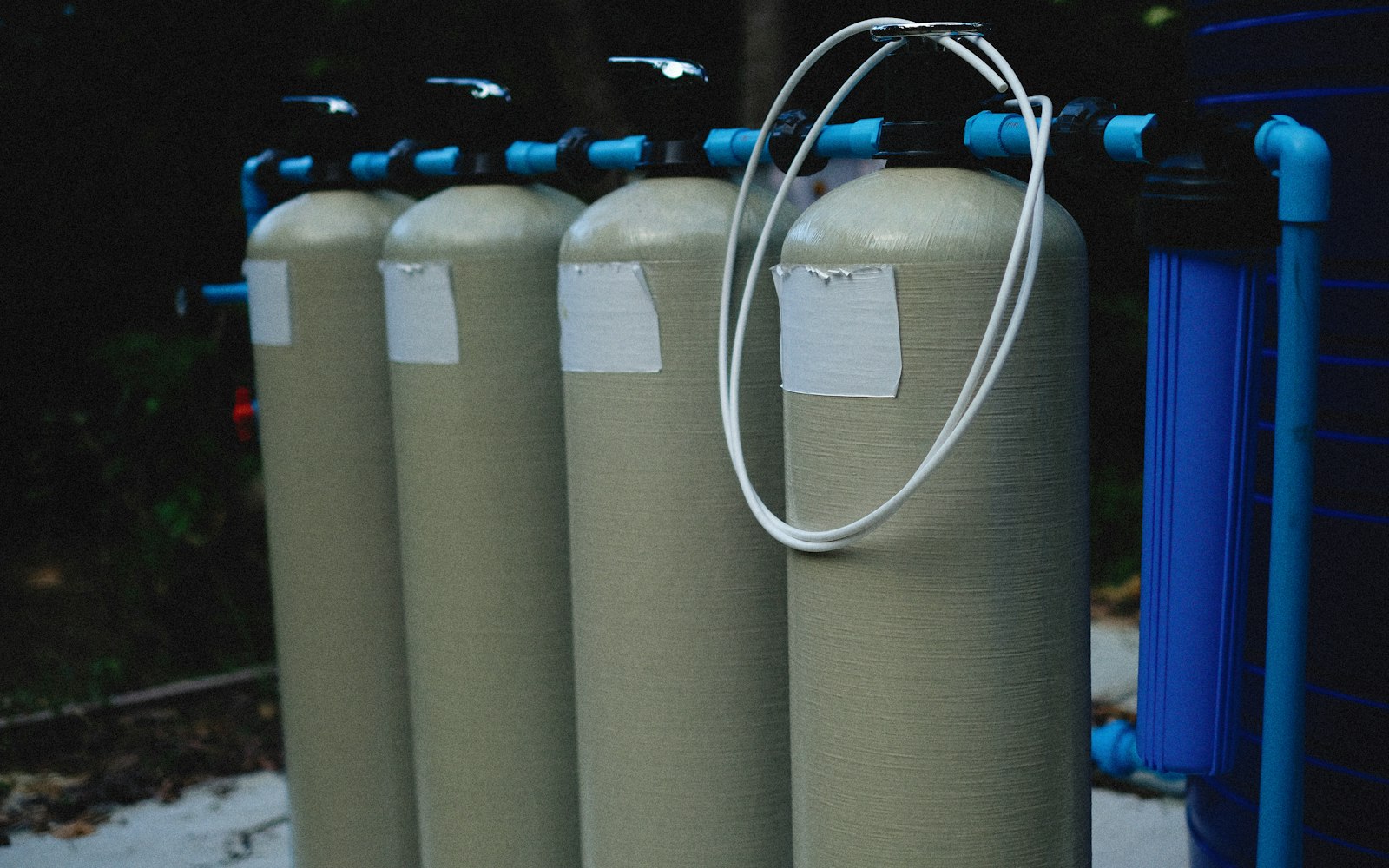
A whole-house water softener costs $1,100–$3,000 installed, and Fixr puts the national average at $2,500. A small unit for a one- or two-bedroom home can come in around $600, while a multi-tank system for a big house can hit $7,000.
The sources do not agree as closely as you might hope. Bob Vila and Inch Calculator average about $1,500, This Old House averages $3,100, and the Costco and Home Depot installation packages Fixr lists start at $2,500–$4,000. Much of the gap is what each site counts: a bare unit, a unit plus labor, or a premium dealer package with a service contract. Compare quotes on the same scope.
What drives the price
System type. A salt-based ion exchange unit is the standard and the cheapest way to actually remove hardness minerals. Dual-tank models cost more because the second tank lets the system keep delivering soft water while one tank regenerates. Fixr puts single-tank installed at $650–$1,500 and dual-tank at $1,500–$3,000.
Capacity. Bigger households and harder water need more grains. Fixr's unit prices climb from $400–$1,000 for a 32,000-grain unit to $1,700–$2,500 for 96,000 grains. Buying too small means the unit regenerates constantly and wears out sooner. Buying too big wastes salt and money.
Brand and dealer. This Old House lists premium brands such as Culligan, Kinetico and EcoWater at $2,500–$4,500 for a complete system, and store brands such as GE, Whirlpool and Kenmore at $800–$1,800. Premium dealers often bundle service and a longer warranty, so the price is not purely the metal and plastic.
Your plumbing. If your house already has a softener loop (a bypass with a spot for the unit), the install is cheap. If not, This Old House adds $200–$800 for the plumbing, and Fixr says a new loop can run $600–$2,000.
Hardness and household size. Both feed the sizing. A four-person home with moderately hard water might need a 32,000-grain unit, while a six-person home with very hard water could need 96,000.
Water softener prices at a glance
Cost by system type
| System type | Fixr (installed) | This Old House | Bob Vila |
|---|---|---|---|
| Single-tank salt-based (ion exchange) | $650–$1,500 | $500–$1,700 | $500–$3,000 |
| Dual-tank salt-based | $1,500–$3,000 | $1,000–$5,000 | $1,000–$5,000 |
| Salt-free | Not listed | $800–$4,000 | $800–$4,000 |
| Magnetic or electronic descaler | $250–$750 | $200–$600 | $200–$600 |
| Reverse osmosis | $2,400–$3,100 | $1,500–$11,000 | $1,500–$1,800 |
Unit price by capacity and what size you need
| Capacity (grains) | Fixr unit price (no labor) | Fixr sizing: who it suits |
|---|---|---|
| 32,000 | $400–$1,000 | 1–4 people up to 20 GPG hardness; 1–2 people up to 30 GPG |
| 40,000 | $500–$1,200 | 1–2 people at 31–40 GPG; 3–4 people at 21–30 GPG |
| 48,000 | $600–$1,500 | 5–6 people at 21–30 GPG |
| 64,000 | $1,000–$1,500 | 3–4 people at 31–40 GPG; 1–2 people at 41–75 GPG |
| 80,000 | $1,500–$1,800 | 5–6 people at 31–50 GPG; 3–4 people at 41–75 GPG |
| 96,000 | $1,700–$2,500 | 5–6 people at 51–100 GPG; 3–4 people at 76–100 GPG |
Installation, retailers and add-ons
| Item | Cost | Source |
|---|---|---|
| Professional installation labor | $150–$1,000 | Fixr, This Old House, Bob Vila |
| Added plumbing if there is no softener loop | $200–$800 | This Old House |
| Softener loop, per Fixr | $600–$2,000 | Fixr |
| Lowe's installed | $1,000–$2,800 | Fixr |
| The Home Depot installed | $2,500–$6,000 | Fixr |
| Costco installed | $4,000–$6,000 | Fixr |
| Removal and disposal of an old unit | $50–$100 | Fixr |
| Professional water hardness test | $50–$100 | Inch Calculator |
| Well water inspector (testing) | $300–$500 | Fixr |
| Rental | $25–$50 per month | Fixr, Bob Vila |
Salt-based, salt-free and everything else
The word "softener" gets used for several different products, and they do not do the same job.
Salt-based ion exchange is the true softener. It swaps the hardness minerals in your water for sodium (or potassium) and then flushes itself with a brine of salt. It is the most common choice and has the clearest track record. You pay for salt, and the unit uses some water to regenerate.
Salt-free systems are priced at $800–$4,000 by This Old House and Bob Vila. In general they condition or change how scale forms rather than removing the minerals, so you may still see spots on glass. They suit people who mostly want to protect pipes and appliances from scale and do not care about the feel of the water. If you want the slick, soap-lathering feel of soft water, a salt-based unit is what delivers it.
Magnetic and electronic descalers are the cheap end at $200–$600 (This Old House, Bob Vila). I would be cautious here. The ads are bold, and the independent evidence is thin, so I would not count on one to solve a serious hard water problem.
Reverse osmosis and distillers treat drinking water, not the whole house. Bob Vila lists reverse osmosis at $1,500–$1,800 and distillers at $1,200–$4,000. People often pair a softener with an under-sink RO unit, but they are different jobs.
Well water can need extra steps like iron removal. Fixr lists a well water softener at $500–$2,000 and a well water inspector at $300–$500 for testing.
Installation and who to hire
Labor for a whole-house softener runs $150–$1,000 in all three major sources, and This Old House says most homeowners pay $500–$700. Fixr notes that a softener company will start at about $150, while a plumber charges $100–$1,000 for the same hookup. The Bureau of Labor Statistics reports a median wage of $30.67 an hour for plumbers, pipefitters and steamfitters (May 2025), but a plumbing company's billing rate is well above that once you add a truck, insurance and overhead.
A straightforward install, where the unit sits near the main water line with a drain and an outlet nearby, takes a few hours. The cost climbs when the plumber needs to build a bypass loop, run a drain line, move pipe or add an electrical outlet. Bob Vila prices plumbing line at $0.50–$1.00 per linear foot and electrical rerouting at $3–$5 per square foot.
DIY saves roughly $500–$1,000 in labor (This Old House, Inch Calculator). I would only do it if you are comfortable sweating copper or working with push-fit fittings. This Old House warns that water damage from a DIY mistake can cost $2,000–$10,000 or more, which is a lot to risk against $600 in labor. Ask your insurance agent whether a failed DIY connection would be covered before you start.
If you do hire, ask whether the quote includes the bypass valve, the drain connection, the permit if your town wants one, and haul-away of an old unit.
Salt, upkeep and the cost over 10 years
The unit is the up-front cost. The running cost is the part buyers underestimate.
Salt. A 40-pound bag runs $5–$10 (Bob Vila, This Old House) or $10–$15 (Fixr). Fixr says you will refill every two to three months. This Old House figures about $5–$10 a month, and Fixr puts total monthly operating cost at $10–$40. Inch Calculator puts salt at about $10 a month, or about $50 a month if you use potassium chloride, which is the choice for people who want to avoid sodium. Potassium bags cost $25–$70 depending on the source.
Service. This Old House lists annual professional servicing at $150–$300, and Bob Vila says an annual visit to inspect, flush and replenish runs $100–$300. Fixr gives a broader maintenance range of $150–$600 and suggests an inspection every two to three years for ion exchange systems. You can skip professional service on a simple unit, but cleaning the brine tank and resin occasionally helps it last.
Lifespan. Fixr says 10–15 years. This Old House says about 20. A well-cared-for unit on moderately hard water is the best case for the longer number.
Put it together for a $2,500 installed system at $20 a month for salt: $2,500 plus $2,400 in salt over ten years comes to about $4,900, before service calls. Salt-free systems with media that lasts for years can come out cheaper on running costs, though they give you a different result.
Well water, add-ons and special cases
Well water is its own category. Bob Vila prices a well water softener at $500–$1,500 and Fixr at $500–$2,000, and Fixr adds $300–$500 for a water well inspector to test hardness. Well water often carries more than hardness (iron is a common extra), so test it before you buy. A unit sized only for hardness can struggle with iron, and a dealer who sells you a plain softener without looking at your test results is guessing.
A few add-ons come up in quotes. Bob Vila lists a self-cleaning feature at $300–$1,000. Fixr lists a whole-house filter paired with a softener at $1,500–$10,000, a very wide range that reflects how many different packages exist. If a quote bundles a filter, ask for the softener and the filter priced separately so you can see what each costs and whether you need both.
Portable units exist for RVs. Fixr puts them at $250–$350, with a handyman install of about $50. They are a different product from a whole-house system and should not be compared with the prices above.
One more scenario: homes with a very small footprint or a single bathroom. Fixr puts the cheapest basic descaler for a one- or two-bedroom home at about $600 installed. That is the realistic floor for a whole-house system. Prices under that in an ad usually mean the unit only, a magnetic device or a promotional price that assumes you do the install yourself.
Replacing an old softener
Swapping an old softener for a new one is cheaper than a first install because the loop and drain are already there. Fixr puts replacement, including removing the old unit, at $700–$1,000, and says disposal of the old unit adds $50–$100.
Is it worth replacing? If your softener is ten or more years old, the resin has probably degraded, the control valve may be leaking, and the unit might be using far more salt and water than a new demand-initiated one would. Signs it is time: scale returning on fixtures, soap that will not lather, salt usage that keeps climbing, or a brine tank filled with a hard crust. A resin bed replacement or valve repair can sometimes extend the life of a decent tank, so ask for that price before you buy a whole new unit.
Where to buy and how to compare quotes
Fixr lists three tiers of retail installation. Lowe's is $1,000–$2,800, The Home Depot is $2,500–$6,000, and Costco is $4,000–$6,000, which is the full package including install. Local water treatment companies and plumbers often fall in between, and the dealers who sell Culligan, Kinetico or EcoWater typically bring a free water test and a sales pitch.
A few ways to keep the quotes honest. Get your own water hardness number first. A pro test costs $50–$100 (Inch Calculator), and a home kit costs $10–$50 (Bob Vila, Inch Calculator). Ask every company for the grain capacity, the model number, the warranty on the tank, the valve and the labor, and the total including install. Be wary of a firm that insists on a high-pressure same-day decision, or one that will not put the model number in writing. Rental programs at $25–$50 a month (Fixr, Bob Vila) cost $3,000–$6,000 over ten years, which is more than buying outright for most homes.
Sample estimate
Illustration
Sample estimate: four-person home with moderately hard water, no existing softener loop
- Professional water hardness test (about 15 GPG)
- $75
- 32,000-grain salt-based unit (Fixr range $400–$1,000)
- $700
- Installation labor (This Old House: most pay $500–$700)
- $600
- Added plumbing for a bypass loop (This Old House: $200–$800)
- $400
- Total
- $1,775
An illustration built from mid-range figures in Fixr, This Old House and Inch Calculator. It lands under Fixr's $2,500 average because the unit is small and the quote is for a basic brand. A premium dealer package for the same house would run higher. It is not a quote.
Ways to bring the price down
- Get your hardness tested before you shop so you buy the right capacity. Fixr prices a 32,000-grain unit at $400–$1,000 and a 48,000-grain one at $600–$1,500, so an unneeded step up costs real money.
- Compare a store-brand unit at $800–$1,800 with a premium dealer package at $2,500–$4,500 (This Old House) for the same capacity, and ask what the extra money buys in warranty and service.
- Check whether your house already has a softener loop. Skipping new plumbing saves $200–$800 (This Old House).
- Use bagged salt from a home center rather than a dealer's delivery. A 40-pound bag is $5–$15 in the sources.
- Skip the rental. At $25–$50 a month, you pay more over ten years than buying a mid-range unit outright.
- If you handle plumbing and electrical work yourself, installation labor is about $500–$1,000 in savings, but price the risk of a leak before you commit.
Frequently asked questions
How much does a whole-house water softener cost?
Fixr puts the typical installed range at $1,100–$3,000, with a $2,500 average. Bob Vila and Inch Calculator average about $1,500 and This Old House about $3,100. A small unit can be $600, and large multi-tank systems reach $7,000.
How much does it cost to install a water softener?
Labor runs $150–$1,000, and most homeowners pay $500–$700 (This Old House). If your home has no bypass loop, add $200–$800 for plumbing, or up to $2,000 for a new loop per Fixr.
How much does salt cost for a water softener?
A 40-pound bag runs $5–$15 depending on the source. Fixr estimates monthly operating cost at $10–$40, and This Old House estimates $5–$10 a month for salt. Potassium chloride costs more, with bags at $25–$70.
How long does a water softener last?
Fixr says 10–15 years and This Old House says about 20. Hardness level, household size and how well you maintain it all move the number.
Is a salt-free water softener worth it?
It depends on the goal. Salt-free systems cost $800–$4,000 (This Old House, Bob Vila) and avoid salt and regeneration water. In general they reduce scale buildup rather than removing hardness minerals, so you may still get spots on glass and a different feel in the shower.
Can I install a water softener myself?
Yes, if you are comfortable with plumbing and your house has a loop or easy access to the main line. You save about $500–$1,000 in labor (This Old House). The downside is a leak: This Old House puts water damage from a DIY mistake at $2,000–$10,000 or more.
Does a water softener need a permit?
Often not, but it depends on your city. Inch Calculator lists a permit at $20–$100 where one is needed. Call your local building department or ask the installer.
Sources
We compare several independent sources for every guide and say where they disagree. Pages were last checked on the dates shown.
- Water Softener Installation Cost (opens in a new tab), Fixr. Accessed November 22, 2026. Used for: national average and typical range, installed cost by type, unit cost by capacity, sizing chart, labor, retailer pricing, salt, lifespan, replacement
- Water Softener System Cost (opens in a new tab), This Old House. Accessed November 22, 2026. Used for: average and range, cost by type, brands, installation labor, added plumbing, salt, servicing, DIY risk, lifespan
- Water Softener System Cost (opens in a new tab), Bob Vila. Accessed November 22, 2026. Used for: average and range, cost by type, labor, plumbing and electrical rates, salt, service, rental
- Cost to Install a Water Softener: 2026 Price Guide (opens in a new tab), Inch Calculator. Accessed November 22, 2026. Used for: average and range, salt and potassium monthly cost, permit, water test costs, DIY savings
- Plumbers, Pipefitters, and Steamfitters: Occupational Outlook Handbook (opens in a new tab), U.S. Bureau of Labor Statistics. Accessed November 22, 2026. Used for: median hourly wage for plumbers (May 2025)
How we put this guide together
We don't take money from contractors or sell your details. Ranges come from published national price data, wage statistics and installer price lists, cross-checked and rounded. Read how we price or tell us if a number looks off in your area via our contact page.
Related cost guides
Water heater replacement
Installed cost to swap a standard 40–50 gallon tank water heater, gas or electric
$700–$2,300Tankless water heater
Installed cost of a whole-house tankless water heater, equipment and labor
$1,200–$4,500Repipe
Whole-house PEX repipe, 1,500–2,500 sq ft home, supply lines only
$5,500–$14,000Sewer line replacement
Full replacement of a typical 50-foot residential sewer lateral
$3,000–$12,500