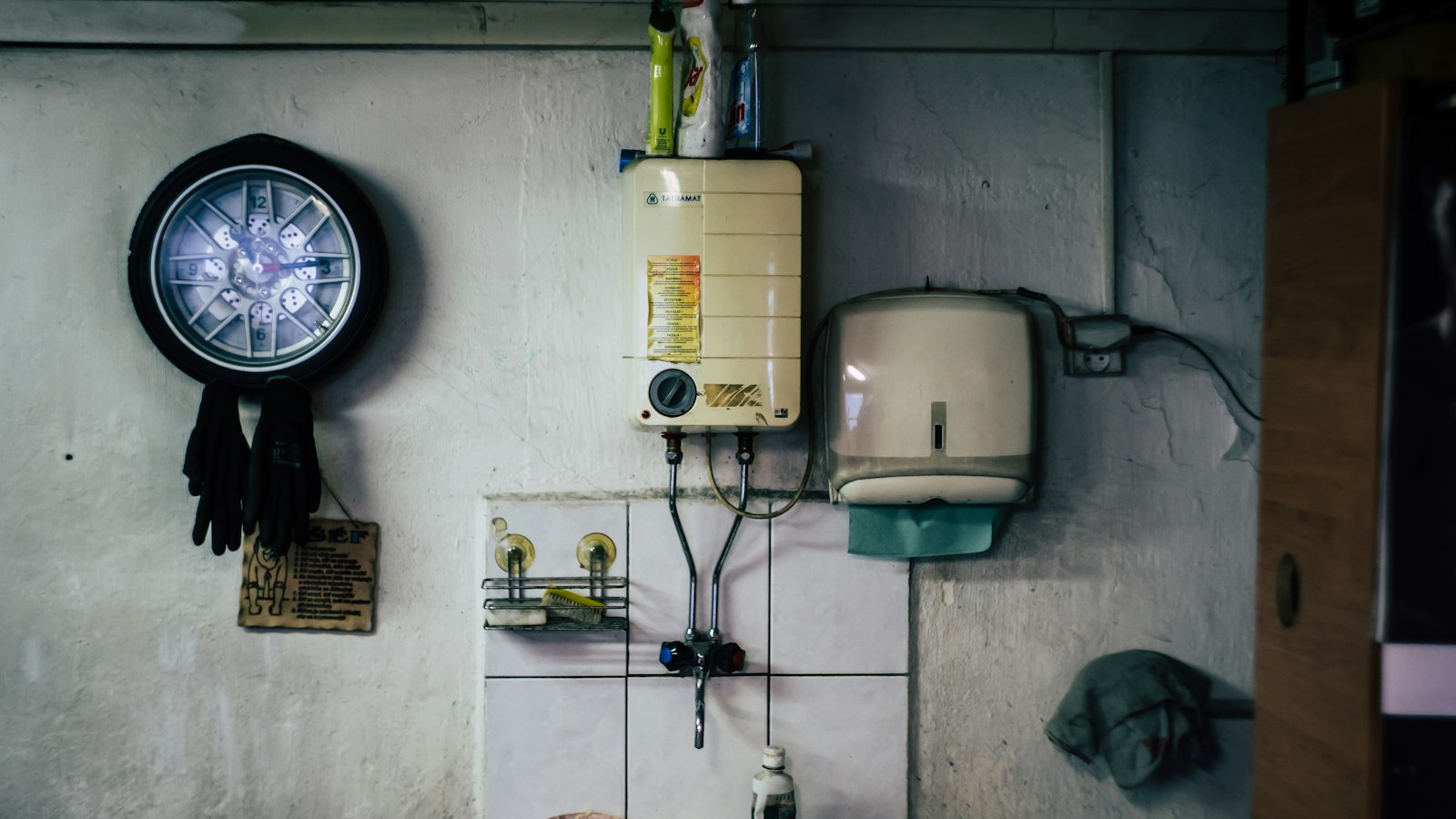
A whole-house tankless water heater costs about $2,800 installed, and most homeowners pay between $1,200 and $4,500. That is clearly more than the $1,400 average for a tank. You are paying for a pricier unit and for the extra work: a bigger gas line, stainless or PVC venting, or a heavy electrical circuit.
The pitch for tankless is endless hot water, a small footprint and a longer lifespan. Whether it earns the premium in your house depends on fuel, usage and what your current setup looks like. If you only need a straight tank replacement, read our water heater replacement cost guide.
What drives the price
Three things decide whether you land near $1,500 or $4,000: the fuel, how much of your existing setup has to change, and the size of the unit.
Fuel. Natural gas and propane units run $750–$2,000 for the unit alone in This Old House's numbers, versus $500–$1,500 for electric. But gas needs a vent, a correctly sized gas line and often a condensate drain. Installation labor on gas is $900–$1,500 against $150–$1,000 for electric.
What you already have. A house with an old tank, a ½-inch gas line and a masonry chimney is the expensive case. NearbyHunt puts tank-to-tankless extras (venting, gas line, electrical) at $500–$1,200. If a previous owner already installed a tankless unit, a swap is much cheaper.
Unit size. A point-of-use unit for a single sink can be under $500. A whole-house unit that can run two showers at once is $1,000–$3,000 depending on the flow rate. Buying too small is a common mistake, because incoming water is colder in winter and the same unit delivers less hot water per minute than its label suggests.
Tankless water heater prices at a glance
Installed cost by fuel type, three sources
| Fuel | This Old House | Fixr | Bob Vila |
|---|---|---|---|
| Electric | $650–$2,500 | $1,000–$3,000 | $800–$1,500 |
| Natural gas | $1,650–$3,500 | $1,400–$3,500 | $1,000–$1,500 |
| Propane | $1,400–$3,500 | $1,400–$3,500 | $1,000–$1,500 |
Equipment price by unit size (flow rate)
| Unit type | Flow rate | Unit price |
|---|---|---|
| Point-of-use | 1–2 GPM | $150–$500 |
| Small whole-house | 2–4 GPM | $500–$1,000 |
| Medium whole-house | 5–7 GPM | $1,000–$2,000 |
| Large whole-house | 8–10 GPM | $1,500–$3,000 |
Extras that often get added
| Item | Cost | Source |
|---|---|---|
| New electrical circuit | $200–$600 | This Old House |
| Full electrical panel upgrade | $1,000–$2,000 | This Old House |
| Gas line upgrade (for example ½-inch to ¾-inch) | $350–$800 | This Old House |
| Gas line run, new | Up to $800 more | Fixr |
| Venting through wall or roof | $400–$800 | This Old House |
| Old water heater removal | $100–$500 | This Old House; Fixr says upwards of $500 |
| Permit | $50–$200 | This Old House |
| Wall repair and paint after access work | About $200 | Fixr |
Yearly operating cost, tank vs tankless
| Setup | This Old House | Fixr |
|---|---|---|
| Gas tankless | $192–$264 | $250 |
| Gas tank | n/a | $275 |
| Electric tankless | $300–$540 | $600 |
| Electric tank | n/a | $450 |
| Conventional tank (fuel not specified) | $440–$580 | n/a |
The electric tankless trap
Electric tankless units look cheap. This Old House has $650–$2,500 total, and Bob Vila $800–$1,500. The catch is the power draw. A whole-house electric unit pulls far more current than a tank does, and many older homes with a small service panel cannot supply it.
That is where This Old House's $1,000–$2,000 full panel upgrade comes from, and a new circuit alone is $200–$600. Our electrical panel upgrade cost guide covers the bigger picture. If your panel is already full or old, add that to the budget before you compare prices.
Operating costs can also bite. This Old House says switching from a gas heater to an electric tankless can add $25–$45 a month in electricity. Fixr lists electric tankless at about $600 a year versus about $250 for gas. In many markets, electric tankless only makes sense for a small apartment or a point-of-use unit.
Labor and installation time
Expect 4–8 hours for a licensed plumber on a typical install (This Old House). Fixr is higher at 6–10 hours, and NearbyHunt says 4–10 hours with labor of $600–$1,850. A tank swap is 1–3 hours for comparison.
Hourly rates vary by source: $75–$150 (This Old House), $75–$130 (Fixr), $45–$200 (Bob Vila). The U.S. Bureau of Labor Statistics reports a median wage of $30.67 an hour for plumbers, pipefitters and steamfitters (May 2025), so most of what you pay is overhead and profit rather than wages. Gas installs may also need a licensed gas fitter, and electric ones an electrician at $50–$100 an hour, per Bob Vila.
Check that your installer is certified by the manufacturer. Many brands make the warranty void on a mistake in venting or gas sizing.
Does it pay for itself?
Usually not on energy alone. This Old House cites a 24%–34% drop in energy use, pulling from ENERGY STAR and Department of Energy figures. In This Old House's operating-cost table, though, gas tankless runs roughly $250–$320 a year cheaper than a conventional tank ($192–$264 versus $440–$580). Meanwhile the averages for tankless ($2,800) and a tank ($1,400) are about $1,400 apart, so the energy savings alone take many years to cover that gap.
The lifespan helps. A tankless unit lasts about 15–20 years (This Old House, NearbyHunt), while a tank lasts 8–12. If you would otherwise buy two tank heaters in that time, the lifespan closes a good part of the gap. Gas tankless units also free up floor space and never run out of hot water, which counts for a lot in a house with a soaking tub and teenagers.
Annual maintenance matters, especially with hard water. This Old House lists $100–$200 for cleaning and up to $500 for descaling. Skip it and the heat exchanger can scale up and fail early.
The federal efficiency credit situation has changed, and sources I opened give conflicting information. This Old House mentions up to $600 for qualifying gas units, but check ENERGY STAR and your utility before counting on it. Utility rebates of $100–$300 and brand rebates of $100–$400 are listed in the same article.
When it is usually not worth it
If your current tank is only a few years old, wait. If your home has a small or full panel and no gas, the electric route carries the costs described above. If you have a high-demand household and a gas line sized for a tank, upsizing the line adds $350–$800 before anything else.
Tankless also is not ideal for very small usage patterns, like a vacation cabin where you run the water once a week. A point-of-use unit near the far-away bathroom is often a cheaper fix for a long wait time than a whole-house conversion.
How to compare quotes
Ask each contractor to itemize: unit model and flow rate, venting type, gas line size, electrical work, condensate handling, permit and haul-away. The quote should say whether the line size matches the unit's BTU input. If it is a gas unit and the quote does not mention the gas line, ask.
Get a quote with and without the flush valves and isolation valves. They cost little and make maintenance far easier. Also ask what happens if the venting route turns out to need a wall or roof penetration. This Old House has $400–$800 for that, and it can hide in a vague allowance.
Sample estimate
Illustration
Sample estimate: gas tankless replacing a gas tank in a Georgia ranch house
- Medium whole-house gas tankless unit (5–7 GPM)
- $1,300
- Installation labor (about 6 hours)
- $1,100
- Gas line upsized from ½ inch to ¾ inch
- $450
- Venting through the wall
- $500
- Old tank removal and disposal
- $150
- Permit
- $100
- Total
- $3,600
An illustration using mid-range pieces of This Old House's cost tables for natural gas units. It is not a quote, and a house that already has the right gas line and vent path could come in well under this.
Ways to bring the price down
- Check your panel before buying electric. A $200–$600 circuit is a very different project from a $1,000–$2,000 panel upgrade.
- Skip a bigger unit than you need. A 5–7 GPM unit at $1,000–$2,000 handles most two-bath homes better than an 8–10 GPM unit at $1,500–$3,000.
- Buy in the off-season. This Old House cites 10%–20% retailer discounts outside winter.
- Apply for rebates. Utility rebates ($100–$300) and brand rebates ($100–$400) can be stacked in some cases.
- Keep the same location for the new unit. Moving it adds gas, water and venting runs.
- Pay for the annual flush. Descaling a failed heat exchanger costs far more than a $100–$200 service visit.
Frequently asked questions
How much does it cost to install a tankless water heater?
The three sources I used put the average at $2,527 (Bob Vila), $2,800 (This Old House) and $2,811 (Fixr). Typical ranges run from about $1,200 to $4,500 depending on fuel and what has to change in the house.
Is a gas or electric tankless water heater cheaper?
Electric units cost less up front and usually less to install, but gas costs less to run. Fixr lists gas tankless operating cost near $250 a year and electric near $600. Electric also risks an electrical panel upgrade of $1,000–$2,000.
How long does a tankless water heater last?
About 15–20 years according to This Old House and NearbyHunt. A conventional tank is 8–12 years.
Can I install a tankless water heater myself?
Gas models need correct venting, gas line sizing and leak testing, and most manufacturers void the warranty on unlicensed work. Many jurisdictions also require a licensed plumber and a permit. Electric units are simpler but still need a dedicated, correctly sized circuit.
How long does installation take?
A licensed plumber typically needs 4–8 hours (This Old House). Fixr says 6–10 hours. Add more time if the gas line, vent or electrical circuit has to be upgraded.
Does a tankless water heater need maintenance?
Yes. This Old House lists $100–$200 for cleaning and up to $500 for descaling. In hard-water areas, a yearly flush keeps the heat exchanger from scaling.
Does tankless really save money?
It cuts energy use by about 24%–34% according to This Old House, but the dollars saved per year are modest and the up-front premium is large. The longer lifespan helps more than the energy savings do.
Sources
We compare several independent sources for every guide and say where they disagree. Pages were last checked on the dates shown.
- How Much Does Tankless Water Heater Installation Cost? (opens in a new tab), This Old House. Accessed November 22, 2026. Used for: average and range, cost by fuel and unit size, extras, lifespan, operating cost, rebates
- Tankless Water Heater Cost (opens in a new tab), Bob Vila. Accessed November 22, 2026. Used for: typical range and average, installed cost by fuel, labor rates
- How Much Does It Cost to Install a Tankless Water Heater? (opens in a new tab), Fixr. Accessed November 22, 2026. Used for: national range and average, equipment by flow rate, labor and installed cost by fuel, operating cost
- Water Heater Replacement Cost: Complete Price Guide 2026 (opens in a new tab), NearbyHunt. Accessed November 22, 2026. Used for: tank-to-tankless extras, labor hours, lifespan
- Plumbers, Pipefitters, and Steamfitters: Occupational Outlook Handbook (opens in a new tab), U.S. Bureau of Labor Statistics. Accessed November 22, 2026. Used for: median hourly wage for plumbers (May 2025)
How we put this guide together
We don't take money from contractors or sell your details. Ranges come from published national price data, wage statistics and installer price lists, cross-checked and rounded. Read how we price or tell us if a number looks off in your area via our contact page.
Related cost guides
Water heater replacement
Installed cost to swap a standard 40–50 gallon tank water heater, gas or electric
$700–$2,300Electrical panel upgrade
Typical total to replace a main panel with a 200-amp panel, labor and permit included
$1,300–$4,500Repipe
Whole-house PEX repipe, 1,500–2,500 sq ft home, supply lines only
$5,500–$14,000Heat pump
Installed air-source heat pump, ducted whole-home system
$5,000–$15,000