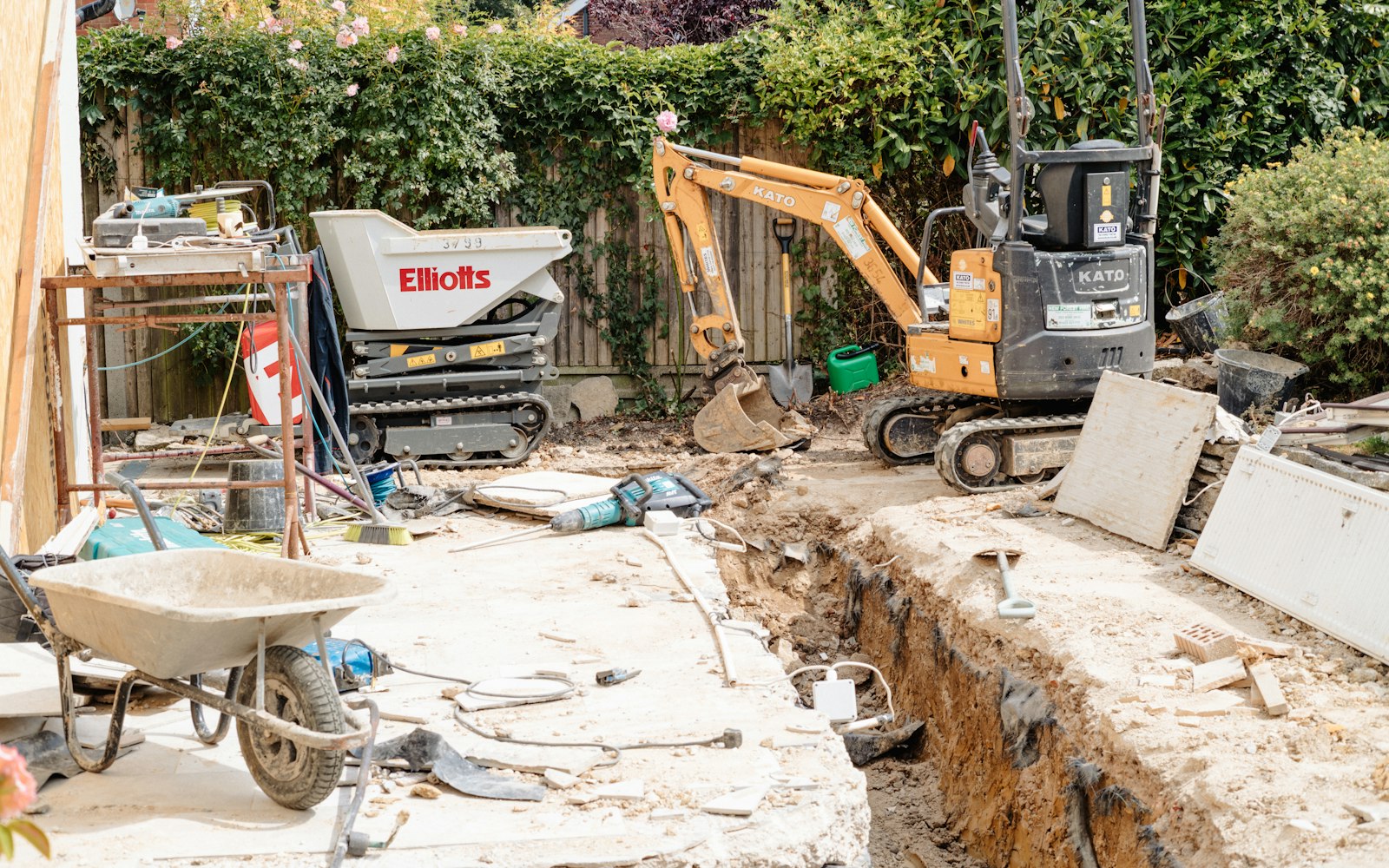
A new septic system costs $4,500–$9,000 for most homes, with a $6,100 national average at Fixr and $7,500 at This Old House. The tank is the cheap part, often $700–$2,000. The expensive parts are the drain field, the soil testing and the digging.
This guide covers installing or replacing a tank, then the costs most owners actually face over the years: pumping, inspections and drain field work. Your local health department decides what system you can install, so treat every figure below as a starting point and get an itemized quote.
What drives the price
Home size. Septic systems are sized by the number of bedrooms, not the number of people who live there. Fixr's installed totals climb from $1,500–$3,000 for two bedrooms to $12,000–$20,000 for five. A four-bedroom house is $7,000–$12,000.
System type. This is the biggest swing. A conventional tank with a gravity drain field is the cheapest, at $3,000–$8,000 installed (This Old House). If your soil is shallow, the water table is high or there is bedrock close to the surface, you may be forced into a mound or aerobic system at $10,000–$20,000 in both sources. The EPA notes mound systems require a lot of space and periodic maintenance, and aerobic treatment units need regular maintenance for life.
Soil and the perc test. Your county will want proof that your soil can absorb effluent. A perc test costs $600–$800 (Fixr) or $700–$2,000 (This Old House). If the soil fails, the cheap system is off the table. Fixr also lists land prep at $1,600–$8,000, which covers clearing, grading and site work.
Tank material and size. A 1,000-gallon concrete tank is $800–$1,250 (Fixr), and a fiberglass one is $1,600–$2,000. These are small numbers next to the total, so do not let tank price drive the decision.
Labor. Fixr puts the contractor at $1,500–$4,000 for design, permits, excavation and installation, with hourly rates of $150–$200 and a 2–5 day job. This Old House says labor is 50%–70% of the total cost.
Location. Rural access, long driveways, rock, a sloped lot or a tight yard all add equipment time. A quote for the same house can swing by thousands depending on where it sits.
Septic tank prices at a glance
Cost by type of system
| System type | This Old House (installed) | Fixr (1,000 gal, materials) |
|---|---|---|
| Conventional | $3,000–$8,000 | $2,000–$10,000 |
| Chamber | $5,000–$12,000 | $3,500–$10,000 |
| Constructed wetland | $5,000–$12,000 | $6,000–$10,000 |
| Sand filter (recirculating) | $7,000–$18,000 | $6,000–$10,000 |
| Drip distribution | $8,000–$18,000 | $4,000–$10,000 |
| Aerobic | $10,000–$20,000 | $10,000–$20,000 |
| Mound | $10,000–$20,000 | $10,000–$20,000 |
| Evapotranspiration | $10,000–$15,000 | $10,000–$15,000 |
Cost by home size and tank capacity
| Bedrooms | Fixr installed total | Tank size (This Old House) | Tank only (This Old House) |
|---|---|---|---|
| 1 | Not listed | 500 gallons | $500–$900 |
| 2 | $1,500–$3,000 | 750 gallons | $700–$1,200 |
| 3 | $3,000–$7,000 | 1,000 gallons (3–4 bedrooms) | $900–$1,500 |
| 4 | $7,000–$12,000 | 1,000 gallons (3–4 bedrooms) | $900–$1,500 |
| 5 | $12,000–$20,000 | 1,200 gallons (5–6 bedrooms) | $1,200–$1,600 |
| 6–7 | Not listed | 1,500 gallons | $1,500–$2,500 |
Tank cost by material (tank only)
| Material | This Old House | Fixr (1,000 gal) | Typical lifespan (Fixr) |
|---|---|---|---|
| Concrete | $700–$2,000 | $800–$1,250 | Up to 40 years when well built |
| Plastic | $500–$2,500 | $830–$1,400 | About 30 years |
| Fiberglass | $1,200–$2,000 | $1,600–$2,000 | Not listed |
| Steel | Not listed | Not listed | 20–25 years |
Testing, permits, labor, drain field and pumping
| Item | Fixr | This Old House |
|---|---|---|
| Percolation (perc) test | $600–$800 | $700–$2,000 |
| Permits | Usually no more than $1,000 | $450–$2,300 |
| Contractor or installation labor (Fixr: design, permits, excavation, installation) | $1,500–$4,000 | $1,500–$4,000 (labor) |
| Design only | $600–$800 | Not listed |
| Drain field installation | $3,500–$11,000 | Not listed |
| Drain field replacement | $2,000–$20,000 | Not listed |
| Drain field clog or flooding remediation | $2,000–$10,000 | Not listed |
| Land preparation | $1,600–$8,000 | Not listed |
| Pumping | $400–$1,000 | $300–$600 |
Which type of septic system do you need
You rarely choose. The health department decides from the soil test, the lot and the local rules. The EPA describes ten common types, and the ones homeowners hear about most are these.
Conventional. A buried tank plus a trench or bed that lets the liquid soak into the soil. It is the lowest-cost option where the soil and the site cooperate.
Chamber. A gravelless drain field built from connected plastic chambers. The EPA says it is easier to deliver and build, and suits high groundwater and places where gravel is scarce. Costs run $5,000–$12,000 installed (This Old House).
Mound. A constructed sand mound is used when soil is shallow, groundwater is high or bedrock is close. A pump chamber doses the mound. Both sources put it at $10,000–$20,000, and it needs more space and more upkeep.
Aerobic treatment unit. Adds oxygen to improve treatment and suits small lots and poor soils. It is also $10,000–$20,000, and the EPA says to expect regular life-time maintenance. Ask any aerobic quote what the maintenance contract costs.
Drip distribution, sand filters and wetlands. These are for tough sites or sensitive water bodies. The EPA notes that drip systems need a large dose tank and electrical power, and recirculating sand filters cost more than a conventional system. Expect $5,000–$18,000 depending on the type (This Old House).
If you are replacing a failed system, ask the county whether the old design is still allowed. Rules often tighten over the decades, and a replacement may need to meet today's standard.
Drain field costs
The drain field (also called a leach field) is where the liquid from the tank is spread into the soil. It is usually the most expensive part of the system, and it is the part that fails.
Fixr puts installing a drain field at $3,500–$11,000 and replacing one at $2,000–$20,000. If the field is clogged or flooding but not dead, remediation runs $2,000–$10,000. The ranges are wide because the work depends on soil, the size the county requires and how much of the old field can be reused. This Old House does not give a standalone drain field figure.
How does a field fail? The EPA's guidance on drain field care points at the usual causes. Heavy loads compress the soil (do not park or drive on the field). Tree and shrub roots get into the pipes. Roof drains and sump pumps dump extra water into it. Wipes, grease and chemicals clog it or kill the bacteria. Laundry all done in one day can flood the field, so the EPA suggests spreading loads across the week. A single running toilet can add up to 200 gallons a day, and indoor use can reach 70 gallons per person per day.
A failed field is not always a full replacement. Pumping the tank, repairing a broken distribution box or pipe, and fixing a leaking fixture can buy years. Get a septic professional to diagnose before signing for the large number.
Pumping, inspections and upkeep
Pumping is routine maintenance, and it is the cheapest way to avoid the $10,000-plus problems above. Cost depends on tank size and your region: $300–$600 at This Old House and $400–$1,000 at Fixr, with Fixr suggesting every 3–5 years.
The EPA says household systems should be inspected by a septic professional at least every three years and pumped roughly every three to five years. Frequency depends on household size, total wastewater volume, the solids in it and the size of the tank. The EPA's rule for when to pump: the scum layer is within six inches of the outlet, the sludge layer is within 12 inches of the outlet, or solids fill more than 25 percent of the liquid depth. Systems with pumps, float switches or other mechanical parts should be checked about once a year, and the EPA suggests a service contract.
The EPA's flush list is short: human waste and toilet paper. Wipes (including baby and wet wipes), grease, coffee grounds, cat litter, dental floss, paper towels, pharmaceuticals and household chemicals do not belong in the system.
On a typical pumping schedule, a $500 job every four years works out to about $125 a year. That is easily the cheapest line item in owning a septic system.
Replacing an old system or repairing it
Replacement is not always the answer. Fixr puts a typical septic system life at 20–30 years, with a wider 15–40 year range, and the material matters: about 30 years for plastic, 20–25 for steel and up to 40 for a well-built concrete tank. An old steel tank is closer to the end of its life than a concrete tank of the same age.
Start with an inspection and a pumping. A pro can tell whether the tank is cracked or leaking, whether the baffles are intact and how the drain field is performing. Often the tank is sound and the field is the problem. In that case Fixr says clogged or flooded fields cost $2,000–$10,000 to remediate, versus $2,000–$20,000 to replace one, so a repair can be a fraction of a full replacement.
If the tank itself has failed, the tank is the small number in the quote: $700–$2,000 for concrete, plastic or fiberglass (This Old House). What you pay for is digging up the old one, hauling it away, reconnecting to the house and the field, and any permit. Ask your county whether replacing only the tank triggers a requirement to upgrade the rest of the system. In some places it can, and that is how a tank swap grows into a much bigger project.
Permits, inspections and hidden costs
A new or replacement septic system needs a permit and a design approved by your local health department. This Old House puts permits at $450–$2,300, while Fixr says they usually do not exceed $1,000. Design only (without installation) runs $600–$800 (Fixr). Plan for a perc test first, because it tells you which systems are even possible.
Extras that show up on invoices: clearing trees and grading the site ($1,600–$8,000 for land preparation, Fixr), rock removal, extra fill for a mound, an effluent pump and alarm, and driveway or landscaping repair afterward. Fixr says excavation is usually included in the installer's price, so ask whether yours is.
Real estate matters too. Some places require a septic inspection when a house sells, and a failed system can hold up a closing or pull down the offer. If you are buying a house on septic, pay for an inspection with the tank opened and pumped, not just a look at the lid. Ask for the pumping records and the system's age.
Who installs a septic system
Septic installation is usually done by a licensed septic or excavation contractor, not a general plumber, and licensing is set by the state or county. Some jurisdictions may require a separate designer for the system layout. Fixr lists design alone at $600–$800.
For context, the Bureau of Labor Statistics reports a median wage of $30.67 an hour for plumbers, pipefitters and steamfitters (May 2025). Septic crews bill far above that because they run excavators, trucks and dump equipment. Fixr's $150–$200 hourly figure for the contractor is a better guide, and it says the job commonly takes 2–5 days.
Get at least three bids on the same design. Ask each contractor for the tank size and material, the type of distribution, the length of drain field, what the permit and the perc test cost, who handles inspections, and what the warranty covers. Be cautious about a bid that is far below the rest. A cheap quote that skips the right-sized field is the kind that fails in five years.
Sample estimate
Illustration
Sample estimate: 3-bedroom home on a rural lot with a conventional system
- Perc test (Fixr $600–$800, This Old House $700–$2,000)
- $700
- Permit (Fixr: up to $1,000)
- $600
- 1,000-gallon concrete tank (Fixr: $800–$1,250)
- $1,000
- Drain field installation (Fixr: $3,500–$11,000)
- $4,500
- Contractor: design, excavation and installation (Fixr: $1,500–$4,000)
- $3,000
- Total
- $9,800
An illustration that sums mid-range parts from Fixr and This Old House. It lands above Fixr's bedroom-based $3,000–$7,000 range for three bedrooms, but inside This Old House's $3,480–$11,625 installed range, which is why itemized bids matter. It is not a quote.
Ways to bring the price down
- Get the perc test and design first, then bid the job. It tells you whether you need a $3,000–$8,000 conventional system or a $10,000–$20,000 mound or aerobic one (This Old House).
- Pump on schedule. At $300–$1,000 every three to five years, it protects a drain field that costs $3,500–$11,000 to install (Fixr).
- Spread laundry over the week and fix running toilets. The EPA says a single leaky toilet can add 200 gallons a day, which is how many drain fields get flooded.
- Keep cars, trees and roof drains off the drain field (EPA). The cheapest repair is the one you never need.
- Get three itemized bids that spell out tank size, drain field length, permit and who handles excavation. Fixr says excavation is usually included, so do not pay for it twice.
- Compare concrete and plastic tanks. Fixr puts concrete at $800–$1,250 and plastic at $830–$1,400 for 1,000 gallons, close enough that the lifespan and the site should decide, not the price.
Frequently asked questions
How much does it cost to install a septic tank?
Fixr puts a typical installation at $4,500–$9,000 with a $6,100 average, while This Old House gives $3,480–$11,625 with a $7,500 average. The tank alone is $700–$2,000, so most of the money is the drain field, testing and labor.
How much does it cost to pump a septic tank?
$300–$600 at This Old House and $400–$1,000 at Fixr. The EPA says to pump household tanks roughly every three to five years and to have the system inspected at least every three years.
How much does a new drain field cost?
Fixr says $3,500–$11,000 to install and $2,000–$20,000 to replace one. Fixing a clogged or flooded field runs $2,000–$10,000.
How long does a septic tank last?
Fixr puts a typical system at 20–30 years, with a possible 15–40 year range. Plastic tanks last about 30 years, steel 20–25, and a well-built concrete tank can reach 40. The drain field and your habits matter as much as the tank.
How much is a perc test and do I need one?
Fixr says $600–$800 and This Old House says $700–$2,000. You almost always need one for a new system, because the result decides which type your county will permit.
What is the cheapest type of septic system?
A conventional system is the lowest-cost option, at $3,000–$8,000 installed per This Old House. Mound and aerobic systems are $10,000–$20,000, and you usually only get them if your soil or water table forces it.
How big a septic tank do I need?
It depends on bedrooms. This Old House lists 500 gallons for one bedroom, 750 for two, 1,000 for three to four, 1,200 for five to six and 1,500 for six to seven. Your county sets the actual minimum.
Sources
We compare several independent sources for every guide and say where they disagree. Pages were last checked on the dates shown.
- Septic Tank Installation Cost (opens in a new tab), This Old House. Accessed November 22, 2026. Used for: average and range, cost by system type, tank material and size, labor share, perc test, permits, pumping
- How Much Does It Cost to Install a Septic Tank System? (opens in a new tab), Fixr. Accessed November 22, 2026. Used for: national average and range, cost by bedrooms, tank capacity and material, system types, labor, drain field, permits, perc test, pumping, lifespan
- Septic Systems: How to Care for Your Septic System (opens in a new tab), U.S. Environmental Protection Agency. Accessed November 22, 2026. Used for: inspection and pumping frequency, when to pump, water use, what not to flush, drain field protection
- Types of Septic Systems (opens in a new tab), U.S. Environmental Protection Agency. Accessed November 22, 2026. Used for: descriptions of conventional, chamber, mound, aerobic, drip and other systems
- Plumbers, Pipefitters, and Steamfitters: Occupational Outlook Handbook (opens in a new tab), U.S. Bureau of Labor Statistics. Accessed November 22, 2026. Used for: median hourly wage for plumbers (May 2025)
How we put this guide together
We don't take money from contractors or sell your details. Ranges come from published national price data, wage statistics and installer price lists, cross-checked and rounded. Read how we price or tell us if a number looks off in your area via our contact page.
Related cost guides
Sewer line replacement
Full replacement of a typical 50-foot residential sewer lateral
$3,000–$12,500Repipe
Whole-house PEX repipe, 1,500–2,500 sq ft home, supply lines only
$5,500–$14,000Water heater replacement
Installed cost to swap a standard 40–50 gallon tank water heater, gas or electric
$700–$2,300Water softener
Typical installed cost of a whole-house water softener
$1,100–$3,000