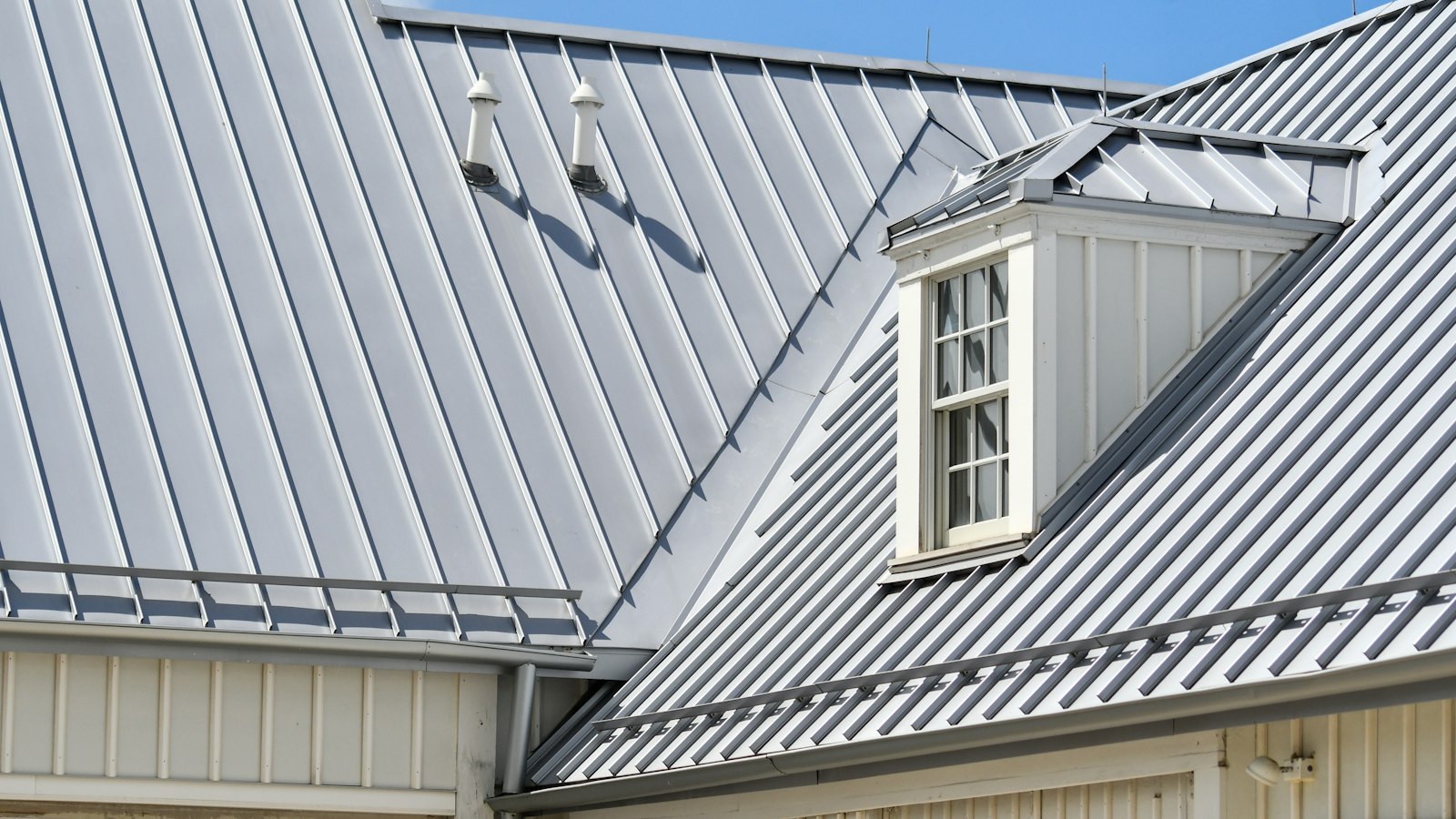
A metal roof costs about $26,500 for an average 2,400 sq ft steel roof, and most jobs fall between $14,400 and $38,400 (Fixr). That works out to $6 to $16 per square foot for steel, or two to three times what asphalt shingles cost.
Price sources disagree more on metal than on almost any other roofing product. TOH puts the national average at $29 per sq ft, nearly three times Fixr's $11. The Cost vs. Value report prices a metal replacement at $51,865. The sources do not say how they weight metal types, so part of the gap may be scope, and part is simply how each site collects its data. Get local bids before you set a budget.
What drives the price
The metal itself
Steel is the workhorse. Aluminum suits coastal homes where salt spray eats steel. Zinc and copper are premium products. Fixr's installed copper range starts at $15 per sq ft and reaches $30, while steel runs $6 to $16. TOH's materials-only figures show the same ladder: zinc at $17, steel $20, aluminum $21 and copper $35 per sq ft.
The panel style
Standing seam, with raised ribs and hidden fasteners, is the high-end residential look and costs $7 to $30 per sq ft in Fixr's table. Corrugated panels with exposed screws are the budget route, and metal shingles that mimic slate or shake sit in the middle at $6 to $22. Exposed fasteners need periodic tightening and gasket replacement, so the lower price comes with maintenance.
Roof size and complexity
A 2,000 sq ft home needs about 2,400 to 2,500 sq ft of roofing (Fixr), because of pitch and overhang. Hips, valleys, dormers and penetrations each take extra cutting and flashing. A simple gable roof is the cheapest to cover. A cut-up roof with many planes can erase the savings of a budget panel.
What comes off first
Fixr lists removal of the existing roof at $1,000 to $7,400, a very wide range. Some metal systems can go over a single layer of shingles, but only if the framing and decking are sound and local code allows it. Ask the installer to put the plan in writing, since a re-roof hides problems that a tear-off exposes.
Underlayment and extras
Fixr puts underlayment at $0.05 to $0.50 per sq ft. Premium synthetic or high-temperature membranes cost more and are worth it under metal, since the panels can run hot in summer. Snow guards, ridge vents and trim pieces add up too, so check the quote lists them.
Metal roof prices at a glance
Metal roof cost by type of metal
| Metal | Installed cost per sq ft (Fixr) | Materials only per sq ft (TOH) | Lifespan (Fixr) |
|---|---|---|---|
| Tin | $3–$15 | $20 | Up to 70 years |
| Aluminum | $4–$12 | $21 | n/a |
| Zinc | $6–$12 | $17 | Up to 100 years |
| Steel | $6–$16 | $20 | Up to 60 years |
| Copper | $15–$30 | $35 | 100 to 200 years |
Metal roof cost by panel style
| Style | Installed cost per sq ft (Fixr) |
|---|---|
| Corrugated metal | $3.50–$26 |
| Metal shingles | $6–$22 |
| Standing seam | $7–$30 |
Metal roof cost by house size
| House size (sq ft) | Fixr range | TOH average |
|---|---|---|
| 1,000 | $4,800–$36,000 | $29,000 |
| 1,500 | $7,200–$54,000 | $43,500 |
| 2,000 | $9,800–$73,500 | $58,000 |
| 2,500 | $12,200–$91,500 | $72,500 |
| 3,000 | $15,600–$117,000 | $87,000 |
Where the money goes (TOH estimate)
- Labor 60%
- Materials and other 40%
Why quotes vary so widely, and what that means for you
If you collect three estimates for the same house, expect a spread of 30% or more. Some of that is honest: different gauges (Fixr notes residential panels typically run from 22 to 29 gauge), different coatings, and different fastening systems. Some is a matter of who has done the work before. Standing seam is specialist work, because the panels are often roll-formed on site and the seams need clean, precise handling.
The best way to compare bids is to ask each contractor to name the panel manufacturer, metal type, gauge, finish and warranty. Two quotes that look alike on price can describe very different roofs. A cheap quote for thin corrugated steel is not an apples-to-apples comparison with a heavier standing-seam system.
Also ask how many metal roofs the crew has installed in the last year. The skill gap between a shingle crew learning on your house and a metal-roofing crew shows up in leaks around penetrations and cut edges.
Labor and who you hire
Labor makes up about 60% of the bill (TOH), and Fixr puts it at $3 to $12 per sq ft, or $300 to $1,200 per roofing square, with a share of 50% to 80%. That is higher than for asphalt because metal installation is more exacting. Panels must be cut and set accurately, flashing has to be formed, and mistakes are costly.
For comparison, the Bureau of Labor Statistics shows a median hourly wage of $26.65 for roofers in May 2025. A metal roofing specialist often earns above that, and the crew that handles your job may be a small, certified team. Ask for references and visit a completed roof if you can. Many panel manufacturers run installer certification programs, and a certified installer is typically the only way to get the full factory warranty. Confirm the terms before signing.
Does a metal roof pay back?
For resale, not fully. The 2025 Cost vs. Value report finds a metal roof replacement costs $51,865 and recoups $25,972, or 50%, while an asphalt roof recoups 68%. Metal buys durability for the owner who stays. Fixr puts the lifespan of all metal roofs at 50 to 70 years on average and TOH says 40 years or more, against 30 to 35 years for asphalt in TOH's data.
The simple math is that if you will live in the house for 25 years or more, one metal roof can replace two asphalt roofs, and you skip a second tear-off. Add possible insurance discounts in hail-prone areas, which vary by insurer, and ask yours. If you may sell in five years, asphalt is the better financial call. Our roof replacement guide has the asphalt numbers for comparison.
Metal versus asphalt over the long haul
Fixr benchmarks asphalt shingles at about $4 per sq ft and says metal costs two to three times as much. On the same 2,400 sq ft of roofing, that is roughly $9,600 for asphalt against $19,200 to $28,800 for metal, using Fixr's multiplier. TOH's asphalt lifespan of 30 to 35 years against 40 to 70 for metal means you may need two asphalt roofs in the time a metal roof is still going. Two asphalt jobs at the TOH price of $5.16 per sq ft on 2,000 sq ft come to $20,638, and that is before tear-off inflation and any rise in labor costs between jobs.
So on pure arithmetic, a metal roof on a house you will keep for 30 years or more is competitive, and sometimes cheaper. The math breaks down in three situations: you might sell within a decade, you live where metal quotes run toward the high end of TOH's figures, or the roof is complex enough that labor swallows the savings.
A quick way to test your own situation is to ask three roofers for both asphalt and metal prices for the same roof. If the metal premium is under 2.5 times, it is probably a fair deal if you are staying. If it is closer to four or five times, step back and ask what the extra is buying.
Choosing the metal, gauge and finish
Steel is the sensible default. It is strong, widely available and the cheapest of the durable options. Look for a galvanized or galvalume coating under the paint, since the coating is what stops rust if the finish gets scratched. Aluminum does not rust, which is why it is popular near the coast, though it dents more easily. Copper and zinc develop a patina and last the longest in Fixr's table (up to 100 years or more), but at $15 to $30 per sq ft for copper installed, they are for owners who want that look and plan to stay.
Gauge is the thickness of the sheet, and lower numbers mean thicker metal. Fixr notes residential roofs usually use 22 to 29 gauge. Thicker panels cost more and resist denting better, so it is a sensible place to spend if hail is common where you live.
Finally, think about color and heat. Lighter, reflective finishes reduce the heat the roof absorbs. I did not find a sourced cooling-savings figure, so treat any contractor claim about energy bills with caution and ask for the product's reflectivity rating instead.
Pitfalls worth knowing
A few trade-offs come with metal, and a good contractor will raise them before you ask.
- Dents. Thin steel and aluminum can dent from large hail or a fallen branch. Heavier gauge panels resist better.
- Noise. Rain is louder on metal unless there is solid decking and insulation below. Most homes with proper decking don't see much of a problem.
- Expansion and movement. Metal expands and contracts with temperature, which is why the fastening system matters.
- Finish. Paint finishes carry their own warranties, usually separate from the panel warranty.
- Fit with other work. If you plan to add solar panels, ask about clamp-on mounts for standing seam, which avoid new roof penetrations. See the solar panel cost guide before locking in a design.
Sample estimate
Illustration
Sample estimate: 2,400 sq ft steel roof on a two-story colonial
- Steel panels installed, 2,400 sq ft at $11 per sq ft (Fixr average)
- $26,400
- Remove one layer of old shingles (within Fixr's $1,000–$7,400)
- $2,000
- Upgraded underlayment, 2,400 sq ft at $0.50 per sq ft (top of Fixr's range)
- $1,200
- Building permit (within the $100–$500 range Fixr reports for roofing permits)
- $300
- Total
- $29,900
An illustration built from published figures, not a quote. It assumes the per-sq-ft price does not include removal or the underlayment upgrade, and that no decking needs replacing.
Ways to bring the price down
- Price corrugated or exposed-fastener steel next to standing seam. If you are fine with the look, you can save a large share of the roofing cost, though you accept more upkeep.
- Ask whether the roof can safely go over one existing shingle layer in your jurisdiction. It can avoid removal costs of $1,000 or more, but get the answer in writing, and weigh the hidden-damage risk.
- Choose a simple roofline if you are designing an addition. Every valley and dormer adds labor on a product where labor is about 60% of the price.
- Ask about the warranty on paint finish and the installer's workmanship, not just the panels, so you are not paying for coverage you will not get.
- Get a hail and wind discount quote from your insurer before you decide. Some offer one for impact-rated roofing, and it affects the long-run math.
- Do not DIY a standing seam roof to save labor. Seams, flashing and cutting errors cause leaks that void warranties.
Frequently asked questions
How much does a metal roof cost per square foot?
Fixr gives $6 to $16 per square foot installed for steel and an average of $11 across all metals. TOH reports a much higher average of $29 per sq ft. The difference reflects what each site includes, so get local quotes.
How much does a 2,000 sq ft metal roof cost?
TOH puts the average at $57,661 for a 2,000 sq ft house, with a range of $25,721 to $89,600. Fixr shows a range of $9,800 to $73,500 for the same house size across all metals and styles.
Is standing seam more expensive than corrugated?
In Fixr's data, standing seam runs $7 to $30 per sq ft and corrugated $3.50 to $26. The ranges overlap, but standing seam is usually the pricier option because of hidden fasteners and more precise installation.
How long does a metal roof last?
Fixr says 50 to 70 years on average, with zinc up to 100 and copper 100 years or more. TOH says 40 years or more. Both are well above asphalt's 30 to 35 years.
Does a metal roof increase home value?
It adds some. Cost vs. Value 2025 finds a metal roof recoups about 50% of its cost at resale, which is less than the 68% for asphalt.
Is a metal roof cheaper than shingles in the long run?
It can be for owners who stay 25 years or more, since one metal roof may replace two asphalt ones. For a shorter stay, the upfront premium of two to three times (Fixr) rarely pays back.
Can you put a metal roof over shingles?
Sometimes. It depends on local code, the condition of the decking and the metal system. Ask the installer to confirm in writing and be aware it can hide existing damage.
Sources
We compare several independent sources for every guide and say where they disagree. Pages were last checked on the dates shown.
- How Much Does a Metal Roof Cost? (opens in a new tab), Fixr. Accessed November 22, 2026. Used for: average and range, cost by metal and style, labor, removal, underlayment, lifespan
- Metal Roofing Cost (opens in a new tab), This Old House. Accessed November 22, 2026. Used for: average per sq ft, totals by roof size, materials-only prices, labor share
- 2025 Cost vs. Value Report (opens in a new tab), Journal of Light Construction / Zonda. Accessed November 22, 2026. Used for: metal and asphalt job cost, resale value and percent recouped
- New Roof Cost (opens in a new tab), This Old House. Accessed November 22, 2026. Used for: asphalt lifespan and comparison
- Roof Replacement Cost (opens in a new tab), Fixr. Accessed November 22, 2026. Used for: roofing permit cost range
- Roofers, Occupational Outlook Handbook (opens in a new tab), U.S. Bureau of Labor Statistics. Accessed November 22, 2026. Used for: median hourly pay, May 2025
How we put this guide together
We don't take money from contractors or sell your details. Ranges come from published national price data, wage statistics and installer price lists, cross-checked and rounded. Read how we price or tell us if a number looks off in your area via our contact page.
Related cost guides
Roof replacement
Typical total for a roughly 2,000 sq ft roof, asphalt shingles, tear-off included
$7,500–$14,000Roof repair
Typical total for a single roof repair, such as a leak, flashing or a patch of shingles
$400–$1,900Solar panel
Typical 12 kW home solar system, installed, before incentives (EnergySage)
$27,526–$33,869